| |

|
Oral history and its significance in local-writing of history of imposed war in Iran

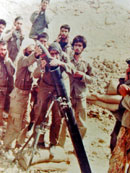
The Iraqi imposed war against Iran is an important event in Iran’s contemporary history the consequences of which have affected many affairs of the people’s lives. It has had various political, social, cultural and economic impacts. In reviewing these impacts, a number of questions are brought up. Questions like what aspects of the war have been focused on more so far? What aspects of the war military, or cultural and economic are more important? How the social nature of the war is likely to be manifested in the writings? How is the status of identities and ethnicities in the history of war? And to what extent is it necessary to pay attention to individual identities and local characteristics?

| |

|
|
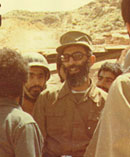
Supreme Leader's Sacred Defense Memories
The official website of the Supreme Leader of the Islamic Revolution Ayatollah Ali Khamenei, www.khamanei.ir, has recently released seven memories by the Leader on the occasion of the anniversary of the Sacred Defense. 1. A woman who offered all her belongings to the Iranian forces at war
During my two or three-day stay in Hamadan, they gave me this letter in which a woman had written about her sacrifices to the war. She said she had already sent he husband and sons to the war front and felt embarrassed not to be able to go over to the battle herself. She also said she had two rings and a little sum of money which were here savings for several months and that she would readily offer them to the fighting forces instead of buying her children warm clothes for the winter.
| |
|
|
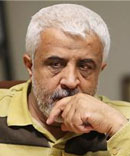
Interview with Commander Golali Babaei
Golali Babaei speaks about memory writing of war. "Memories of the Sacred Defense days are useful for the betterment of the society and fight against social issues, and can be used to show people how to live a better life."
Every year Iran celebrates September 22-29 as the Sacred Defense Week which begins with the anniversary of Iraqi forces attacking Iran borders on September 22 1980 and ends with the anniversary of braking the seize of Abadan on September 29 1982. The history of the 8-year Iraq-imposed war on Iran is full of analyses, interpretations, memories and stories which could be heard from everyone witnessed the crisis. However, when heard from war experts and military commanders of that era, the history of the war and the way things happened are much more precise and well-founded.
| |
|
|
Challenges of Oral Historiography of War
Oral historiography is the process of recording history by in-person interviews whose transcripts are stored without any subjective interpretations. Oral historiography is a form of interview in which the interviewer has a brief understanding of a given topic and seeks to reach out for details by the questions they ask the interviewees to clarify a historical event from the viewpoints of an eyewitness. This needs thorough policy-making, well-defined objectives and research projects as well as an audience, interviewers and interviewees. Generally speaking, oral historiography of sacrifice and martyrdom is faced with two major challenges:
| |
|
|
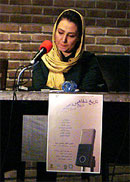
Oral History of Neighborhood in Tehran Examined
A gathering was held here in Tehran in assessment of the history of a Tehran neighborhood called Moniriyeh in the presence of a number of leading archaeologists and historians.
The gathering was put together by the Institute of Architectural and Civil Oral History of the Contemporary Era.
The institute was formed in 2011 by a number of interested researchers of architecture and civilization. The institute has so far conducted various projects and has organized over 100 gatherings in the presence of senior architecture scholars of the country.
The institute has in fact made itself committed to conducting oral history projects with regards to the history of cities of Iran and is still in its incipience.
| |
|
|
Oral History Weekly Magazine Aims and Regulations
Oral History Weekly Magazine wishes to create a suitable place for thoughts and idea development; Its main field would be “Oral History” and subjects as telling & writing memoirs, writing diaries, travelogues, chronologies, and all other subfields of history which are presented in the form of news, articles, reports, notes, interviews and memoirs can be included. There is no limitation on the length of would-be-sent materials.
Mentioning the name, academic background and email is necessary. Articles with complete references and bibliography are more credited and an abstract would quite helpful.
Weekly is not about to publish any material consisting insults and libels about other people or anything that brings anxiety to public opinion. Weekly can edit and translate the received materials.
The published articles and materials are only the writer’s ideas and Oral History Weekly Magazine has no responsibility about their content.
|
|
|

● Oral history interviews of oil industry followed up
● Oral history narrator passes away
● Volumes 26, 27 of “Holy Defense Chronology” released
● A glance at fate of separatist groups
● Role of France in Iraqi imposed war reviewed

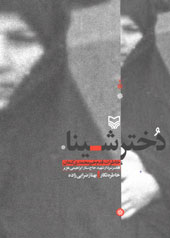
Daughter of Sheena-6
Memories of Qadamkheyr Mohammadi Kanaan
Wife of Sardar Shaheed Haj Sattar Ebrahimi Hajir
Memory writer: Behnaz Zarrabizadeh
Tehran, Sooreh Mehr Publications Company, 2011 (Persian Version)
Translated by Zahra Hosseinian
Alone and with a bundle of clothes, Samad’s mother came in the afternoon. My mother thanked and put that bundle in the center of room, pointed out to me to open it. Reluctantly I sat in the center of room and opened the bundle’s knot. There were some blouse, skirt and clothes which I did not like. Without any thanks, just as I had opened the bundle, I folded the clothes, put them in the bundle, and tied the knot.
Samad's mother knew, but did not say anything. My mother was biting her lips, moving her eyebrows up and down, and pointing to me to thank, to smile and to say they are very nice and I liked them; but I said nothing. Peevishly I sat in the corner of room.
Samad's mother explained everything for him. A few days later, Samad came. He had worn a hat to cover his bald head. Also he had carried a hold-all bag by his hand. As always, he smiled when saw me and said: "You’re welcome!"
I took the hold-all bag and ran toward one of the basement rooms, without saying anything. He followed me and called me. |


|
|