| |
|
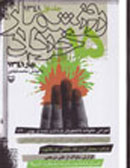
‘A Day-by-Day Account of June 5 Uprising’ published

The three-volume book, ‘A Day-by-Day Account of June 5 Uprising’ in Qom which describes the struggle of clerics and people against the former Iranian monarchial regime in 1961-1964 was published.
According to IBNA correspondent, this book which has been printed by Soureh Mehr Publication, portrays the background and aftermaths of this rebellion based on historical documents including written documents, journals and oral memories.

| |

|
|
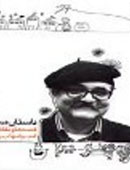
Filmmaker, makes his fantasies into a book
An Iranian filmmaker Amir Shahab Razavian has illustrated his fantasies and long-standing memories into a fiction book for children titled ‘The Traveler’s Story’.
According to IBNA media and arts correspondent, Razavian, whose feature films include The Journey of the Grey Men, Tehran, Seven O'clock in the Morning, Colors of Memory (The Azure of the Extinguished Town) and Granny & Summer the idea of writing this book came to his mind when he was working as electrician in the set of a film by his friend.
| |
|
|
The Lion's Gate
It is easy to see why Steven Pressfield was drawn to the story of the Israeli victory over the combined armies of the Arab countries in the Six-Day War of 1967. Pressfield is best known for GATES OF FIRE, the classic exposition of the Spartan warriors at the gates of Thermopylae, but he is also the author of THE WAR OF ART, in which he develops and shares his theory of Resistance.
Pressfield’s basic concept is that there exists, out there in the ether, an invisible and powerful counterforce called Resistance, which pounces on the artist at the moment of artistic creation and does everything it can to stop the work of art from being produced. Resistance, Pressfield tells us, lies and cheats and fools us into believing that other things are more important than the creation of art.
| |
|
|
Stories as a Window Into Schizophrenia
CINCINNATI — The psychologist Lynda Crane found that of the many injuries inflicted by schizophrenia, the greatest could be the pain of being forgotten. Just naming the illness somehow erased the person, something she learned when her 18-year-old son’s doctors said he had schizophrenia. Six years later, he committed suicide.
“It took me a long time to come to terms with it,” Dr. Crane says. “Even I had a hard time understanding it, how this bright man, with a brilliant future, could suffer like this. One thing I learned was that as soon as you mentioned the word, people stopped seeing the person. They just saw the diagnosis and a collection of symptoms. Doug, my son, was forgotten.”
| |
|
|
TEN YEARS IN IRAN – SOME HIGH LIGHTS (3)
Although I had good reason in the years ahead to be critical of the Shah and his paranoia about the British, which he shared with most of his subjects, I continued to believe that he provided the Strong leadership the country so badly needed. When l left Tehran on retirement in April 1971 I noted — and reported — signs of trouble ahead — student unrest, inflation, urban guerrilla activity, a Shah unwilling to listen to others or accept criticism — but never for one moment thought he might be toppled from his throne as happened seven years later. The Ayatollah Khomeini’s broadcasts from Iraq were not, at that time, considered any more important than reports of religious fundamentalist activity among some of the young. The religious classes who had opposed the Shah’s reforms had, most of us believed, been effectively silenced following the riots of June 1963.
| |
|
|
Oral History Weekly Magazine Aims and Regulations
Oral History Weekly Magazine wishes to create a suitable place for thoughts and idea development; Its main field would be “Oral History” and subjects as telling & writing memoirs, writing diaries, travelogues, chronologies, and all other subfields of history which are presented in the form of news, articles, reports, notes, interviews and memoirs can be included. There is no limitation on the length of would-be-sent materials.
Mentioning the name, academic background and email is necessary. Articles with complete references and bibliography are more credited and an abstract would quite helpful.
Weekly is not about to publish any material consisting insults and libels about other people or anything that brings anxiety to public opinion. Weekly can edit and translate the received materials.
The published articles and materials are only the writer’s ideas and Oral History Weekly Magazine has no responsibility about their content.
|
|
|

●Five oral history books released
●"Memoirs of Baneh's Women" to be published
●Daily notes of Jalal Al-e Ahmad to be released
●Memoirs of Medina jail published

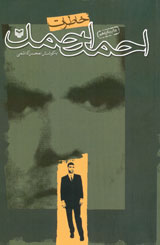
Ahmad Ahmad Memoirs (80)
Edited by Mohsen Kazemi
Soureh Mehr Publishing Company
(Original Text in Persian, 2000)
Translated by Mohammad Karimi
Beacon of Light
Refah School became the headquarters of revolution leadership after the arrival of Imam. Although I could not take part in the activities as others because of my physical conditions but I was enthusiastic to do something and leave away the responsibilities. Maybe despite all those hard conditions I could do something, even so little. I went toward Refah School. People had gathered in front of the school. It was almost impossible to move. The first thing that I spotted was the propaganda made by MKO members and leaders such as Masoud Rajavi and Moosa Khiabani. I visited many people there; the late Haj mehdi Araghi, Ebrahim Yazdi, Abbass Agha Zamani (Abusharif), Jaad Mansouri and …. It was so interesting to visit Abusharif again there. He had recently arrived in the country. He told me: “Ahmad! Please introduce any revolutionary comrade, young or old. |


|
|