| |
|
TEN YEARS IN IRAN – SOME HIGH LIGHTS (I)

Lecture delivered at the Society’s Anniversary Meeting on 13 June 1991. Sir Denis Wright GCMG first went to Iran in December 1953 as charge d’affaires to reopen the British Embassy after the break in diplomatic relations following Dr. Moussadeq‘s nationalisation of oil, remaining there under Sir Roger Stevens as counsellor until October 1955 when he was appointed an under-secretary in the Foreign Office. He returned to Tehran as ambassador in April 1963 and served there for the record period of eight years before retiring in 1971. He was President of the British Institute of Persian Studies 1978-87 and is currently President of the Iran Society. He is an Honorary Fellow of two Oxford colleges, St. Edmund Hall and St. Antony’s. Translations of his two books, The English amongst the Persians and The Persians amongst the English have both been pirated in Tehran -the former by four different publishers under four different titles! Sir Denis joined the Society in 1945 and has lectured to it on three previous occasions.

| |

|
|
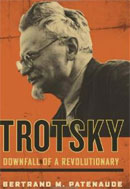
Trotsky
Few political figures of the twentieth century have aroused as much passion, controversy, and curiosity as Leon Trotsky. Trotsky was that rare combination of the man of ideas and the man of action. His role in history—his epic rise and fall, his fiery persona, his violent end in Mexico in August 1940—holds a fascination that transcends the history of the Russian Revolution. Based on extensive firsthand research, this groundbreaking biography examines Trotsky's remarkable life from the perspective of his last exile in Mexico.
Bertrand M. Patenaude masterfully interweaves the story of Trotsky's final years in Mexico with flashbacks to pivotal episodes in his career as a young Marxist, revolutionary hero, Red Army chief, Bolshevik leader, outcast from Stalin's USSR, and ultimately heretic of the Kremlin, targeted for assassination by its secret police. He vividly recounts the contentious Dewey Commission hearings and the passionate debates among liberals and Communists in the United States and Europe over the Moscow Trials and the charges made against Trotsky.
| |
|
|
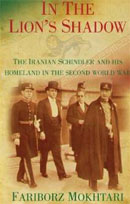
In the Lion's Shadow
The astonishing story of a brave Iranian diplomat who saved many Jewish lives in World War II—acutely relevant to Iranian-Israeli relations today
After the invasion of France in 1940 a junior Iranian diplomat, the aristocratic Abdol-Hossein Sardari, found himself in charge of Iran's legation in Paris, and set about cultivating German and Vichy officials in order to protect the Iranian Jewish community in the country. He met the racial purity laws head-on, claiming that despite the fact that some Iranians had followed the teachings of Moses for thousands of years, they had always been of Iranian stock and therefore were "Mosaique" not "Juden"—this book includes the Nazi official correspondence seeking "expert opinion" on this troublesome argument. Alongside the dramatic and romantic narrative of Sardari's life (he refused to abandon the Iranian Jews in France even when recalled by his government and continued without pay) is the larger picture of the betrayal of Iran's neutrality by the Allies, then the eventual handing over of Axis diplomats and citizens to the Soviets "to be interrogated severely."
| |
|
|
CFP - Palestinian mobility and inequalities - 1st GIS Congress, Paris, July 2015
1st Congress of the Scientific Interest Group «Moyen-Orient & Mondes musulmans», July 7th-9th, 2015, Paris:
Panel: «Cross-border circulations and inequalities within Palestinian societies»
This panel will take as its starting point the spate of recent researches focused on mobility and exchanges among Palestinians in the Middle East. Its first goal is to explore the nexus of relations between borders, mobility and inequalities within Palestinian societies in Israel/Palestine and beyond, among refugee communities and across the Palestinian diaspora. Researchers have highlighted the political economy of the checkpoint; they have studied the systemic logics at work there as well as along the West Bank wall and at border crossings, insisting on expanding the scope of their inquiries beyond the symbolic load and the effective violence of those places. We want to enrich this perspective, and invite abstracts focusing on what those obstacles become in the long run and in the everyday. This also means investigating the historical precedents of present-day border control policies, such as police control in Mandate Palestine or the use of violence to produce Israel's border from 1949 onwards.
| |
|
|
Oral History Weekly Magazine Aims and Regulations
Oral History Weekly Magazine wishes to create a suitable place for thoughts and idea development; Its main field would be “Oral History” and subjects as telling & writing memoirs, writing diaries, travelogues, chronologies, and all other subfields of history which are presented in the form of news, articles, reports, notes, interviews and memoirs can be included. There is no limitation on the length of would-be-sent materials.
Mentioning the name, academic background and email is necessary. Articles with complete references and bibliography are more credited and an abstract would quite helpful.
Weekly is not about to publish any material consisting insults and libels about other people or anything that brings anxiety to public opinion. Weekly can edit and translate the received materials.
The published articles and materials are only the writer’s ideas and Oral History Weekly Magazine has no responsibility about their content.
|
|
|

●Oral history workshop to be held
●Handwritings found in Daneshvar's house reviewed
●Memoir "This Boy" receives two prizes
●Autobiography of former tennis player announced year book

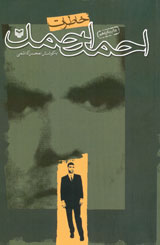
Ahmad Ahmad Memoirs (78)
Edited by Mohsen Kazemi
Soureh Mehr Publishing Company
(Original Text in Persian, 2000)
Translated by Mohammad Karimi
Remarriage
From the very early days after my freedom, in all the meetings and gathering I had, I was eager to hear something about Fatima; news that may clarify what had happened to her. I was deeply thoughtful about whatever that had passed to us. Some of my relative and friends had identified my confusion and perplexity. They would console me.
My mother in law was the one who would come to visit me more than others but saying not a word about Fatima. I thought that she might have some news about her but she did not like to say anything. I waited till the time that there were less visits. My mother in law was a believing woman and was always suspected by SAVAK. She was still silent. I gradually found out that Fatima had been killed. When I understood it, a heavy sad burden sat on my shoulders. I would worship the God day and night to abate my burden. I was wondering where I could refer to get some news about my missing wife; the one that I would not find any more; the one who was lost in a foggy road in rain. She went and left the twins for me. She left and I hope her to have flown lightly. I hope she could have found the chance to repent and ask for God’s sake. May … |


|
|