| |
|
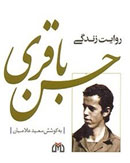
Books about memoirs of Baqeri and Khosravi released

About his newly-released book, Saeed Alamian said, "The collection of memories of Ali Khosravi titled "On Way" has been published by the International Publication. It is among the first ones which deal with writing the memoires of the soldiers who were in the concentration camps of the Saddam's army. Khosravi was among the POWs of the eight-year holy defense who spent some ten years in Iraq's different camps. The literature used about Iran's POWs usually had a one-sided view which was written either fully black or white. A moderate look was seen less in such works. This is one of the characteristics of "On Way". Moreover, we have tried in the book to narrate the days of captivity, its problems and the vents happened for Iranian POWs from the language of an army soldier. This has been paid less attention by the writers who work in the area of the holy defense."

| |

|
|
Senate documents to be released soon
During the 5th Expert Meeting of the Majlis(parliament) History with the topic of reviewing of the 19th and 20th Majlises held in the venue of the Majlis's Constitutional Hall on 30 Ordibehesht 1393 solar hijri (May 20, 2014), the Director of Iran's Majlis Library, Museum and Document Center Mohammad Rajabi has announced that the documents related to the first term of Iran's Majlis until the last day of this Majlis during Pahlavi will be released by the center in a digitalized form.
Referring to the digital capabilities of these CDs, he urged the researchers to make use of them properly.
He also spoke of the release of the Senate documents until the end of the season of spring, saying, "They will be presented with the same quality of the Majlis documents and I urge the professors and students in the fields of history and political science to use the treasury."
| |
|
|
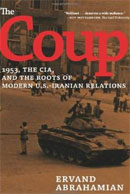
The Coup
In August 1953, the U.S. Central Intelligence Agency orchestrated the swift overthrow of Iran’s democratically elected leader and installed Muhammad Reza Shah Pahlavi in his place. Over the next twenty-six years, the United States backed the unpopular, authoritarian shah and his secret police; in exchange, it reaped a share of Iran’s oil wealth and became a key player in this volatile region.
The blowback was almost inevitable, as this new and revealing history of the coup and its consequences shows. When the 1979 Iranian Revolution deposed the shah and replaced his puppet government with a radical Islamic republic under Ayatollah Ruhollah Khomeini, the shift reverberated throughout the Middle East and the world, casting a long, dark shadow over U.S.-Iran relations that extends to the present day.
| |
|
|
11th Global Conference: Making Sense Of: Dying and Death
This inter- and multi-disciplinary conference explores dying and death and the ways culture impacts care for the dying, the overall experience of dying, and how the dead are remembered. Over the past four decades, scholarship in thanatology has increased dramatically. This particular conference seeks a broad array of perspectives that explore, analyse, and/or interpret the myriad interrelations and interactions that exist between death and culture. Culture not only presents and portrays ideas about \"a good death\" and norms that seek to achieve it, culture also operates as both a vehicle and medium through which meaning about death is communicated and understood. Sadly, too, culture sometimes facilitates death through violence.
| |
|
|
Oral History Weekly Magazine Aims and Regulations
Oral History Weekly Magazine wishes to create a suitable place for thoughts and idea development; Its main field would be “Oral History” and subjects as telling & writing memoirs, writing diaries, travelogues, chronologies, and all other subfields of history which are presented in the form of news, articles, reports, notes, interviews and memoirs can be included. There is no limitation on the length of would-be-sent materials.
Mentioning the name, academic background and email is necessary. Articles with complete references and bibliography are more credited and an abstract would quite helpful.
Weekly is not about to publish any material consisting insults and libels about other people or anything that brings anxiety to public opinion. Weekly can edit and translate the received materials.
The published articles and materials are only the writer’s ideas and Oral History Weekly Magazine has no responsibility about their content.
|
|
|

●Oral history department to publish two new books
●Monograph on Iran's presence in world football cup
●Famous photographer passes away
●Memoirs of Iranian climber to be collected

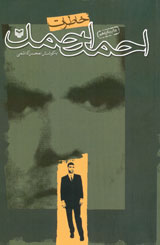
Ahmad Ahmad Memoirs (77)
Edited by Mohsen Kazemi
Soureh Mehr Publishing Company
(Original Text in Persian, 2000)
Translated by Mohammad Karimi
Carpet Shop
Three weeks after my freedom, Haj Yousef Rashidi –one of INP pals of mine- called me and said: “Ahmad! You should not stay at home. You should work. I have a shop near to Emamzadeh Ma’soum at Qapan Siding. Go and sit there.”
I said: “I have disabled legs; how could I move and work there?” He said: “That shop is my brother’s. I am your associate. Do not worry. You should just sit and do not care about anything.” I said: “Oh God! They will shut your shop. Your brother and you would be jobless then.” He said: “It’s not your business! Just go there. At least you may find a circle for making contacts with other comrades.” I said: “Ok! However, I should see there first.” |


|
|