| |

|
Oral History and Journalism

One of the subjects always posed in oral history is its ability to communicate with different working realms. The importance of the communication between oral history and journalism was more clearly set forth in a session, where some journalists and those involved in journalism were present. It was held in Document Center of Astan Qods Razavi in May 2014 with the subject-matter of local press. In this meeting those involved in different areas of journalism put their experiences and concerns which can be of interest for the oral historians. In spite of some differences in the goals and methods, there is a good capacity for cooperation between journalism and oral history, regarding the numerous national and local journals and those active in this field. The most important common fields are:

| |

|
|
Voices of Legacy: It's important to share Anne Arundel's African-American stories
Humans have created a variety of ways to tell their stories and share their histories: by word of mouth, through books, photographs and even quilts.
In the past, African-Americans shared their history orally because it was illegal for them to learn how to read and write, so handing down stories and history by word of mouth from generation to generation was very important. Today, oral history is still an important way to share and collect family stories.
In October, the Freetown Improvement Association will sponsor a Neighborhood History Project in cooperation with the Kunta Kinte-Alex Haley Foundation and Sojourner-Douglass College. They will be collecting and preserving information from residents in a variety of forms that will help tell the story of the Freetown community.
| |
|
|
1940S TRACK STAR, OLYMPIAN MADE HIS HOME IN FALLBROOK
Mel Patton, a standout sprinter of the late 1940s who won two gold medals at the 1948 Olympic Games in London and for 13 years reigned over his sport as the unofficial “fastest man in the world,” died May 9 at his home in Fallbrook. He was 89.
His death was announced by his academic and athletic alma mater, the University of Southern California. The cause was complications from cancer and diabetes, said his wife, Shirley Patton.
At the London Olympics, “Pell Mel,” as he was known to sportswriters, won a gold in the 200-meter dash and a second gold as anchor of the 4x100-meter relay team.
| |
|
|
Oral History Discovery Connects Carving in Italy with Kentucky WWII Veteran
Newswise — Seventy years after the date of combat in the small town of Tremensuoli, Italy, during World War II, the University of Kentucky’s Louie B. Nunn Center for Oral History is bringing to life the story of a Kentucky soldier. From Italy to Dachau, the discovery and the center's own OHMS (Oral History Metadata Synchronizer) technology will give researchers and the public a detailed personal account of one American GI's experience.
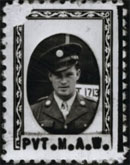
About a year ago, the Nunn Center began to follow up on a request from Italian researcher and author Giovanni Caruso, who was looking to find out more about a soldier who had left his mark on that community. While working on a story he wanted to write on a battle in the small town of Tremensuoli in 1944, Caruso had discovered a carving in a stone wall there that identified an American soldier by name, hometown and state, and date (M.A. Webb, C-ville, Ky., 1944 March 30).
| |
|
|
Listening to the voices from Kenya's colonial past
The culling of imperial archives led me to turn to oral history. But for many scholars, the official myths of the British Empire persist.
'Africans make up stories." I heard this refrain over and again while researching imperial history in Kenya. I was scarcely surprised when it came from former settlers and colonial officials living out their days in the country's bucolic highlands. But I was concerned to find that this position took on intractable proportions among some historians.
At the time of decolonisation, colonial officials destroyed and removed tons of documents from Kenya. To overcome this, I collected hundreds of oral testimonies and integrated them with fragments of remaining archival evidence to challenge entrenched views of British imperialism.
| |
|
|
Oral History Weekly Magazine Aims and Regulations
Oral History Weekly Magazine wishes to create a suitable place for thoughts and idea development; Its main field would be “Oral History” and subjects as telling & writing memoirs, writing diaries, travelogues, chronologies, and all other subfields of history which are presented in the form of news, articles, reports, notes, interviews and memoirs can be included. There is no limitation on the length of would-be-sent materials.
Mentioning the name, academic background and email is necessary. Articles with complete references and bibliography are more credited and an abstract would quite helpful.
Weekly is not about to publish any material consisting insults and libels about other people or anything that brings anxiety to public opinion. Weekly can edit and translate the received materials.
The published articles and materials are only the writer’s ideas and Oral History Weekly Magazine has no responsibility about their content.
|
|
|

●Oral history of prominent figures registered in two provinces
●Agreements signed for recording oral history
●21,000 hours of interview and 60 memory books
●Memories of revolution’s art history to be published
●Memories of ayatollah released
●Best-selling war memoirs in Tehran book fair

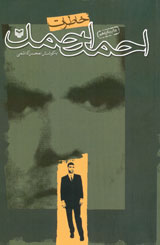
Ahmad Ahmad Memoirs (76)
Edited by Mohsen Kazemi
Soureh Mehr Publishing Company
(Original Text in Persian, 2000)
Translated by Mohammad Karimi
Hope Melodies
Defeated Plot
I analyzed the situation as SAVAK aimed to crush my nerves and force me into a mental war. They repeatedly had not succeeded in defeating or crushing me in previous prisons by tortures and interrogations. SAVAK had concluded that my presence in prison was a sign of hope and strong soul for other prisoners. It would also persuade the strugglers out of prison to take revenge. So, they freed me in a very calculated plot to reach two goals. The first goal was to engage me in a mental dilemma and pretend to my friends that I had cooperated with SAVAK. The second goal of SAVAK was to know and indentify the people who might have contacts with me. So, I was really worried about my friends to be informed and also their contacts. I did not want them to be entrapped by SAVAK. I was ready to be hanged but save my friends. (1)
It was possibly a day after my freedom that somebody knocked on the door. My Mum opened the door and called me: “Ahmad! Someone is here who says he is a friend of you. |


|
|