| |
|
Iran, Armenia sign agreement for compilation of oral history

According to an agreement signed between the Head of National Library and Archives of Iran's Gilan Province and the Dean of Yerevan's Iranology College, grounds have been provided for exchange of historical information and old documents existing in the Armenian archive of documental centers with Gilan's center. The dispatch of the two parties' professional experts and active researchers in the areas of archive, dispatch of students in the fields of history, geography and the ones related to Gilan's recognition for taking part in research and educational meetings and the holding of conferences and experts meetings revolving around the history of Gilan's Armenians, the commitment of the Armenian side on presenting a complete list of old documents, manuscripts, copied and stone documents in the area of Gilan's history and geography, the commitment of the Head of National Library and Archives of Iran's Gilan Province on presenting a complete list of written works and various Persian articles related to the identity and record of Armenia and old documents related to Armenians living in Gilan, and the two sides' effort in compiling an illustrated collection from the mausoleums of Iranian immigrant prominent figures in Armenia are among the contents of the agreement.

| |

|
|
250 hours of interview recorded for oral history plan
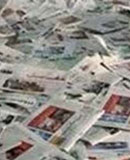
Concurrent with the World Day of Press Freedom, some of veterans and experts in the area of press and journalism archive gathered in Mashhad's Astan Qods Razavi Archive Center, and reviewed and criticized the press history in Khorasan Province.
The Head of the Organization of Libraries, Museums and Center of Deeds of Astan Quds Razavi Mohammad Hadi Zahedi said in the meeting, "The organization's press archive is the country's largest press archive in terms of the number by having 1,300,000 copies of journals in different languages since Qajarid era. At present, there are more than 800 titles of journals related to Khorasan in Astan Qods Razavi's press archive.
| |
|
|
Criticizing narrator and narration, necessity of oral history area
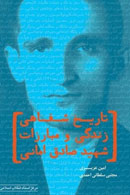
Amin Azizi, co-author of "Oral History of Life and Campaigns of Martyr Sadeq Amani" in the unveiling ceremony of the book held in the 27th Tehran International Book Fair said, "One of the existing problems in the country's oral history area is lack of awareness about its significance and lack of a certain process for educating professional experts. There many centers which conducts interviews with different people, but they do not make any effort to protect or publish them. Thus, a kind of mistrust is seen among the writers and memory owners toward the area. We have not still been able to create a kind of trust in this area. One of the existing necessities in the area of the revolution's oral history is to criticize the narrator and narration. In Hadith science, we have a term titled "The Science of Dignitaries" in which the narrator and its authenticity are reviewed.
| |
|
|
Two IRGC commanders to write memoirs
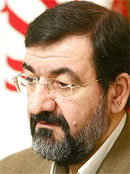
The Secretary of Iran's Expediency Council and former commander of the Islamic Revolution's Guards Corps (IRGC) during the Iraqi imposed war against Iran, Mohsen Rezaee said, "I have not written any memory or book about the holy defense so far because the country's political atmosphere is in a way that the holy defense memories which was a national pride are misused. I have many memories from that period but due to factional interpretations from them, I have deliberated writing the memoirs. The reformists say why the imposed war continued after the liberation of Khorramshahr and the principalists ask why Imam Khomeini (God's mercy upon his soul) accepted the UN resolution? There are many reasons for each of the questions but they cannot be answered candidly for security reasons. In such political atmosphere, I am worried that the holy defense of our people which is the pride of the Iranian nation becomes a plaything.
| |
|
|
Oral History Weekly Magazine Aims and Regulations
Oral History Weekly Magazine wishes to create a suitable place for thoughts and idea development; Its main field would be “Oral History” and subjects as telling & writing memoirs, writing diaries, travelogues, chronologies, and all other subfields of history which are presented in the form of news, articles, reports, notes, interviews and memoirs can be included. There is no limitation on the length of would-be-sent materials.
Mentioning the name, academic background and email is necessary. Articles with complete references and bibliography are more credited and an abstract would quite helpful.
Weekly is not about to publish any material consisting insults and libels about other people or anything that brings anxiety to public opinion. Weekly can edit and translate the received materials.
The published articles and materials are only the writer’s ideas and Oral History Weekly Magazine has no responsibility about their content.
|
|
|

● Martyr's oral history plan to be implemented
●"Oral history beyond interview"
●History of Iran's children literature released
●Memoirs of campaign against Pahlavi regime released

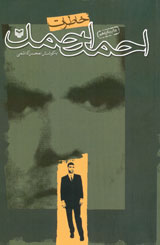
Ahmad Ahmad Memoirs (75)
Edited by Mohsen Kazemi
Soureh Mehr Publishing Company
(Original Text in Persian, 2000)
Translated by Mohammad Karimi
Freedom and Boycott Delusion
In my previous imprisonments, despite all the tortures and interrogations and trails, I hoped to be free and continue my struggle. But this time it was different; no tortures, no interrogations, no trails and no hope. I was mixed up mentally and quite depressed. My body was so weak and my legs were hurt. Uncertainty about my fate and also Fatima conditions had occupied my mind and bothering me.
They took me to the interrogation room but there was no sign of threat, torture or beating. They just advised me (as they would say it) and sometimes promising my freedom. I did not know the reason behind this behavior and floundering in ambiguity. Finally I found out that I had been under the protection of Red Cross and Human Rights Committee. Later Haj Agha Mohammad Mehrayeen told me: “Then I was in UK for medical treatment. |


|
|