| |
|
“The City that Does Not Exist” turned into e-book

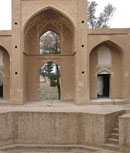
“The City that Does Not Exist” as an oral history documentary of the city of Toun (Ferdows) has been released in a CD in the form of an electronic book.
The author of the e-book Ahmad Armaqani says, “This oral history documentary depicts part of the identity and culture of the people of Ferdows since 1308 solar hijri (1929) till the city’s destruction in 1347 solar hijri(1968).
The documentary two parts of which have so far been completed in the form of two CDs, includes memories of the people of Ferdows since 40 years ago which have been narrated by 30 elder and old figures of the city.

| |

|
|
7 private narrations and oral history of life of Imam Mussa Sadr
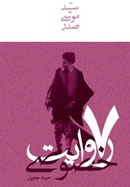
Imam Mussa Sadr Research Center will present “Seyyed Mussa Sadr: Seven Private Narrations” in the 27th Tehran International Book Fair. It has been authored by Habibeh Jafarian. The narration of seven close friends of Imam Mussa Sadr has been collected in the book.
“Hit Your Stick on Prison Bars, Mussa!” co-authored by Fereshteh Moradi and Hassan Houshmand is another book which deals with the life of Imam Mussa Sadr, and “The Hadith of Time:
Memoirs of Master Seyyed Hadi Khosrow Shahi” compiled by Hamid Qazvini is the second oral history book in Imam Mussa Sadr Research Center.
| |
|
|
“About Life” narrated by Bastani Parizi, Simin Danenshvar, Jalal Al-e Ahmad
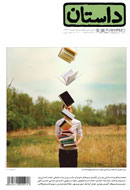
The issue 43 of Dastan Hamshahri Monthly has been release in Ordibehesht 1393 (April 2014). The issue’s “About Life” section starts from a narration by Mohammad Ebrahim Bastani Parizi in which he narrates old memories with a sweet writing. In another narration titled “why do You Cry?” Soroush Sehat has spoken about the strange relation of fathers and their sons in various generations, narrating a memory from his father, himself and his son.
| |
|
|
Cultural package of actor’s account introduced
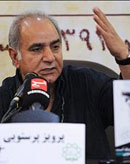
The press conference of the cultural package “I Am Parviz Parastooee” was held in Ferdows Local House on 9 Ordibehesht 1393 (March 29, 2014). It was said in the conference that the collection was shaped upon the suggestion of Omid Rouhani in 1380 (2001) and Parviz Parastooee, the Iranian renowned actor was asked to express his account.
But the work was stopped after one year due to some reasons and after several years, the talks started for producing a documentary and writing a book with the cooperation of Leili Kariman. The package includes a book, a documentary and an audio album.
| |
|
|
Oral History Weekly Magazine Aims and Regulations
Oral History Weekly Magazine wishes to create a suitable place for thoughts and idea development; Its main field would be “Oral History” and subjects as telling & writing memoirs, writing diaries, travelogues, chronologies, and all other subfields of history which are presented in the form of news, articles, reports, notes, interviews and memoirs can be included. There is no limitation on the length of would-be-sent materials.
Mentioning the name, academic background and email is necessary. Articles with complete references and bibliography are more credited and an abstract would quite helpful.
Weekly is not about to publish any material consisting insults and libels about other people or anything that brings anxiety to public opinion. Weekly can edit and translate the received materials.
The published articles and materials are only the writer’s ideas and Oral History Weekly Magazine has no responsibility about their content.
|
|
|

● Memoirs of Ayatollah Kashani’s daughter published
● 8000s unpublished notes from Jalal Al-e Ahmad exist
● Hashemi Rafsanjani’s record of conduct and memoirs to be unveiled
● “Street 42” and “Great God from Rise to Fall”
● “Iran during Different Periods” has 7 interviews

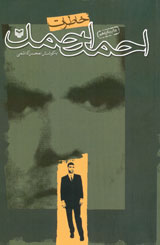
Ahmad Ahmad Memoirs (74)
Edited by Mohsen Kazemi
Soureh Mehr Publishing Company
(Original Text in Persian, 2000)
Translated by Mohammad Karimi
The Unforgettable Day of Visit
The visiting days in prison had a quite different feeling. After visiting families the prisoners would become more determined and patient. So my friends would ask me to let them inform my family to visit me. But I did not like to because I thought that I would be executed.
|


|
|