| |
|
World War Words: The Creation of a World War II–Specific Vocabulary for the Oral History Collection at The National WWII Museum (2)

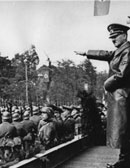
Last week we presented Part I of this article and now here is Part II: The vocabulary team, under the guidance of our grant consultants, The Randforce Associates, began by reviewing other locally created vocabularies, both World War II– and non-World War II–related and especially those of other IMLS grant projects. The museum focused most heavily on a coding framework developed by Arkansas Educational Television Network (AETN) for a project entitled “In Their Words” (http://www.intheirwords.org/). Although our team rejected many of the terms used in this project, we agreed that it was crucial to use terms that described experiences rather than objects. For example, the team concentrated on, and later adopted, a version of the AETN term Interactions with Friends/Family. Narrowing our focus on this type of description was instrumental in developing the theory behind the museum’s vocabulary.

| |

|
|
Remembering Forced Labour. A Digital Interview Archive
“Forced Labor 1939-1945” commemorates the more than twelve million people who were forced to work for Nazi Germany. Nearly 600 former forced laborers from 26 countries tell their life stories in detailed audio and video interviews. The interviews have been made accessible in an online archive at www.zwangsarbeit-archiv.de. Sophisticated retrieval tools enhance a user-friendly research and a close-to-the-source analysis of the interview recordings. National Socialist Germany created one of the largest systems of forced labour in history. Not until 60 years after the war did the debate over compensation help to revive the memory of the long-forgotten victims of forced labour. While the survivors strive for a living remembrance in the country where they lost their youth, historians increasingly ask about individual and collective patterns of memory. Today, however, only a few survivors remain to recount their experiences.
| |
|
|
Written History vs. the Oral Tradition
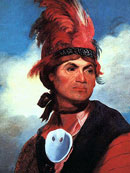
Recently I had the pleasure to watch an interesting debate on an Internet message board Devoted to discussion on Mohawk history. The debate pitted written history against oral tradition. After reading it I had to really think about it and the way we try to decipher truth and authenticity in historical accounts.
In order to find truth and authenticity in traditional knowledge and history, one must gather extensive information from various resources. These resources can come from a variety of locations, including discussions with the learned, personal experience, and yes; even the written word. While the task of gathering information maybe at times difficult and time consuming, the most trying aspect in the pursuit of knowledge is deciphering its Truth and authenticity. In order to accomplish this, the following formula can help this journey.
| |
|
|
Is Oral History Good for You?
What happens when medical science invites the humanities into its world? How do we, can we, measure and evaluate the qualitative process and product of oral history to quantitative researchers? Can we incorporate a quantitative tool into the oral history process to persuasively argue that some patient populations would benefit from the inclusion of a patient-centered, oral narrative intervention? This is the story of one effort to test the effectiveness of oral history interviewing in a clinical setting by its inclusion in a treatment program for veterans with prostate cancer. Prostate cancer is the most prevalent cancer in males, but currently there are no definitive treatment guidelines. This lack of medical consensus on treatment causes significant psychological distress for many patients, and, increasingly, medical professionals are interested in finding alternative ways to address their patients’ concerns.
| |
|
|
Oral History Weekly Magazine Aims and Regulations
Oral History Weekly Magazine wishes to create a suitable place for thoughts and idea development; Its main field would be “Oral History” and subjects as telling & writing memoirs, writing diaries, travelogues, chronologies, and all other subfields of history which are presented in the form of news, articles, reports, notes, interviews and memoirs can be included. There is no limitation on the length of would-be-sent materials.
Mentioning the name, academic background and email is necessary. Articles with complete references and bibliography are more credited and an abstract would quite helpful.
Weekly is not about to publish any material consisting insults and libels about other people or anything that brings anxiety to public opinion. Weekly can edit and translate the received materials.
The published articles and materials are only the writer’s ideas and Oral History Weekly Magazine has no responsibility about their content.
|
|
|

● Guard's memories on detention days of Imam Khomeini (God's mercy upon his soul)
● Call for memories on the passing away of Iraj Afshar
● "Narration of Injury" talks about Valfajr 10
● Interviews of 1340s released
● Book of interview with Albert Kochouee released
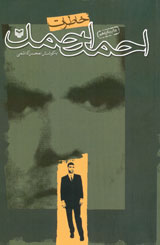
Ahmad Ahmad Memoirs (66)
Edited by Mohsen Kazemi
Soureh Mehr Publishing Company
(Original Text in Persian, 2000)
Translated by Mohammad Karimi
“The Relief is so close”
The late Andarzgou would gather together and connect to each other the Muslim kindred spirits to reinforce the activities. So he introduced the late Majid Tavassoli Hojati (1) to me with the pseudonym of Meysam to cooperate with him in Movahedin Group. Andarzgou said: “Ahmad! All of them are young and separated members of MKO. They were not active there as much as you were; they have been only sympathizers. Make a group with them and try not getting involved in any conflict. Right now, you should only try to save yourselves.” |


|
|