| |
|
Fellowship: Wonderful New Opportunity, Fulbright - National Geographic Digital Storytelling Fellowship

The Fulbright - National Geographic Digital Storytelling Fellowship is a new component of the Fulbright U.S. Student Program that provides opportunities for U.S. citizens to participate in an academic year of overseas travel and digital storytelling in up to three countries on a globally significant social or environmental topic. This Fellowship is made possible through a partnership between the U.S. Department of State and the National Geographic Society.
The wide variety of new digital media tools and platforms has created an unprecedented opportunity for people from all disciplines and backgrounds to share observations and personal narratives with global audiences online. These storytelling tools are powerful resources as we seek to expand our knowledge of pressing transnational issues and build ties across cultures.

| |

|
|
Call for papers: “Travelling Memories: Lives in Transition”
Helsinki, 27-28 November 2014: Papers are invited for contributions to the fifth international symposium of the Finnish Oral History Network "Travelling Memories: Lives in Transition" hosted by the Finnish Literature Society in collaboration with the Academy of Finland. Our intention is to bring together scholars of oral history and life history writing to discuss the travelling of both people and memories across time, place, and different media. The invited speakers include Alessandro Portelli (University of Rome Sapienza), Baiba Bela (University of Latvia), and Outi Fingerroos (University of Jyväskylä). Mass migration and new media are the key characteristics of today's world. Though people have always moved from place to place, never before has migration in all its forms affected so many people's lives as it does today. Even when we ourselves do not move, mediated memories of people living in diaspora and exile are a part of our everyday life.
| |
|
|
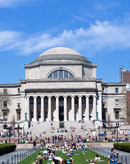
Procedures of Video Recorded Interviews At COLUMBIA CENTER FOR ORAL HISTORY
Over the last 15 years 500 hours of oral history on broadcast quality video, adapting the traditional techniques of oral history - in which rapport and research are central to the interview - to the studio environment. Interviews on the history of the Carnegie Corporation culminated with a series of interviews conducted with Carnegie grantees in South Africa, including Archbishop Emeritus Desmond Tutu, and a biographical interview with Jimmy Carter in Atlanta. The introduction of video into the oral history process often follows a series of audio interviews, which are transcribed and returned to the interviewee before the video session is scheduled. The video interview is then an opportunity for a deeper reflection on the issues discussed in the previous interview and a moment in which the interviewee can consciously speak to a larger public.
| |
|
|
Preserving the Past with Oral History
We all have stories to tell. Stories about the exciting and tragic and emotional things we have lived though. Oral history listens to these stories. Oral history is the systematic collection of living people’s testimony about their own lives. Historians have finally realized that the everyday memories of everyday people, not just the rich and famous, have vast historical importance. Rich in personal triumph and tragedy, oral history is the history of the common person.
| |
|
|
World War Words: The Creation of a World War II–Specific Vocabulary for the Oral History Collection at The National WWII Museum (1)
Many interpretative institutions today focus increasingly on narratives, storytelling, and the personal experiences of historical and everyday figures. Providing access to oral histories through a vocabulary focused on describing these stories and experiences is a unique and effective way to share these narratives. This article is a case study of the development of a controlled vocabulary for the oral history collections at The National WWII Museum. Storytelling has played a central role at The National WWII Museum since its opening as the D-Day Museum in New Orleans in 2000.
| |
|
|
Oral History Weekly Magazine Aims and Regulations
Oral History Weekly Magazine wishes to create a suitable place for thoughts and idea development; Its main field would be “Oral History” and subjects as telling & writing memoirs, writing diaries, travelogues, chronologies, and all other subfields of history which are presented in the form of news, articles, reports, notes, interviews and memoirs can be included. There is no limitation on the length of would-be-sent materials.
Mentioning the name, academic background and email is necessary. Articles with complete references and bibliography are more credited and an abstract would quite helpful.
Weekly is not about to publish any material consisting insults and libels about other people or anything that brings anxiety to public opinion. Weekly can edit and translate the received materials.
The published articles and materials are only the writer’s ideas and Oral History Weekly Magazine has no responsibility about their content.
|
|
|

● Oral history workshop to be held in Shiraz
● Oral history of music of revolution to be compiled
● Holy defense memories to be released in 70 volumes
● Memories of 40 commanders to be released in 1000 pages
● 3 volumes of the revolution's chronology to be released

Ahmad Ahmad Memoirs (65)
Edited by Mohsen Kazemi
Soureh Mehr Publishing Company
(Original Text in Persian, 2000)
Translated by Mohammad Karimi
Revelation of Crime
After the separation from MKO and making contacts with the late Andarzgou, I needed money. I decided to go the last team-house that I had rented in Gorgan Street to get back my deposit. So, I went to the landlord’s coffee shop. Visiting me, he did greetings warmly and asked: “Where have you been Mr. Akbari?” I said: “I took my family to country.” Without asking me if have had lunch or not, he ordered a Dizzi for me. Then told me: “Help yourself, I’ll be back.” I started to eat and he was busy with his customers. After the lunch I waited but he did not come back. I ignored what I had come for and decided to go. I stood up and went to the counter. I wanted to pay for Dizzi but he did not accept and said: “Mr. Akbari, your brother-in-law [Iraj] came several times to get your deposit, but I did not give it to him.” The level of their evilness was so surprising to me; they would not lose any little chance of grabbing money until the last moment. In order not to make suspicious, I said: |


|
|