| |

|
The miracle of Imam Khomeini’s “Nothing”

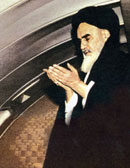
When asked by a foreign reporter how he felt in his return flight home, Imam Khomeini said, “Nothing”.
In the meantime, Shapour Bakhtiar spread the question and answer widely on the national TV in a bid to discourage civilians’ support for imam’s cause; it backfired, however, and accelerated the spread of the revolution.
On February 10, 1979, Homafaran (air force cadets) reacted emotionally to the recorded video of the interview broadcast on the national TV with loud Salavats (prai

| |

|
|
The Reasons of Establishment and Consequences of Afghan Immigrants’ Self-run Schools in Isfahan (Iran)
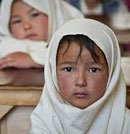
The present study aims at finding the motives of establishment along with evaluating the consequences of Afghan immigrants’ self-run schools in city of Isfahan. As a practical research, this paper includes the principles of oral history studies. Moreover this paper employs observation, interview and questionnaire, as three main tools to collect data. The research population includes teachers, principals and also founders of self-run schools for Afghan immigrants in Isfahan. Totally 37 participants, 24 filled the questionnaire out and 13 took part in interviews. Two questionnaires have been designed by researchers for teachers and principals of self-run schools whose data is used in this research. Questions of interview and questioner mainly focus on participants’ experiences during 2005-2012 in city of Isfahan. Providing an integrative identity and self-confidence, Afghan community’s sensitivity about their children’s continuing education, providing job opportunities for Afghan women and also their presence in society are regarded as the consequences of such schools.
| |
|
|
750 hours of interview conducted about oral history of revolution
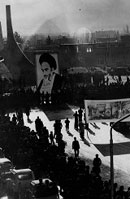
Fatemeh Khandan, an expert in the Department of Revolution Studies in the Management of Documents and Press of the Organization of Libraries, Museums and Center of Deeds of Astan Quds Razavi says, "In the section of oral history revolving around Islamic revolution, mosque, munificence, and the role of the guilds during the Islamic revolution, 750 hours of interviews have been conducted with 140 revolutionary activists from various classes of the community in 1340s and 1350s', adding that there are also 1200 hours of interview about the revolution period in the archive of the Oral History Department .
| |
|
|
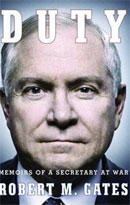
Review: Duty
Greg Jaffe covered the Pentagon for The Washington Post and is a co-author of “The Fourth Star: Four Generals and the Epic Struggle for the Future of the United States Army.”
Maybe it was the time of year, just before the Christmas holidays. Maybe it was the setting — a bare-bones combat outpost in the violent mountains of eastern Afghanistan. Maybe it was the strain of more than four years of signing deployment orders that he knew would lead to the deaths of more young Americans. But in December 2010, speaking to troops clustered around him, Robert M. Gates was overcome by an uncharacteristic flood of emotion.
| |
|
|
Review: Soviet Families' Inner Lives-2
In order to protect their children, imprisoned parents told their children to renounce them. Liza (last name not known) was imprisoned in 1937. One day, she received a letter from her fifteen-year-old daughter, Zoia, who asked her mother “whether you are guilty or not.” In case she was not guilty, Zoia would not join the Komsomol. “But if you are guilty, then I won’t write to you anymore, because I love our Soviet government and I hate its enemies and I will hate you if you are one of them. Mama, tell me the truth.” Liza ended her four-page letter to her daughter with the words, in capital letters: “ZOIA, YOU ARE RIGHT. I AM GUILTY. JOIN THE KOMSOMOL. THIS IS THE LAST TIME I AM GOING TO WRITE TO YOU. BE HAPPY, YOU AND LIALIA. MOTHER.” According to a report from Olga Adamova-Sliuzberg, Liza’s friend in prison, “Liza showed the correspondence to Olga, and then banged her head on the table. Choking on tears, she said: ‘It is better she hates me. How would she live without the Komsomol - an alien? She would hate the Soviet power. It is better she hates me.’ From that day, recalls Olga, Liza ‘never said a word about her daughters and did not receive any more letters.’” (302–3).
| |
|
|
ORAL HISTORY: A Collaborative Method of (Auto)Biography Interview (Part VI)
More than a decade after writing and publishing an autoethnographic story with my partner Art Bochner about an abortion that occurred early in our relationship, I received this e-mail from a professor, who had assigned our story in an undergraduate class. “I gave the students the opportunity to write about it. Would you like to see what they wrote?” he e-mailed. I said yes, though I felt some anxiety when the responses arrived the next day. The students were asked to write about how they felt while reading the text. This was optional, but many students indicated that the text was extremely evocative and I wanted to provide a space where they could express how they truly felt. So several decided to send me an e-mail while others chatted with me outside of class.
| |
|
|
Oral History Weekly Magazine Aims and Regulations
Oral History Weekly Magazine wishes to create a suitable place for thoughts and idea development; Its main field would be “Oral History” and subjects as telling & writing memoirs, writing diaries, travelogues, chronologies, and all other subfields of history which are presented in the form of news, articles, reports, notes, interviews and memoirs can be included. There is no limitation on the length of would-be-sent materials.
Mentioning the name, academic background and email is necessary. Articles with complete references and bibliography are more credited and an abstract would quite helpful.
Weekly is not about to publish any material consisting insults and libels about other people or anything that brings anxiety to public opinion. Weekly can edit and translate the received materials.
The published articles and materials are only the writer’s ideas and Oral History Weekly Magazine has no responsibility about their content.
|
|
|

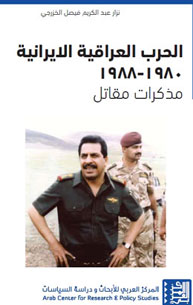
● Memoirs of Saddam's Chairman of Joint Chiefs of Staff released
● Interview training course for registering oral history to be held
● Conference of "Methodology of Historical Studies" to review oral history
● Memoirs of Ahmadinejad's presidency terms to be released
● "Daily Notes" about ups and downs of Daryabandari's life released
● Jews residing in Palestine interviewed

Ahmad Ahmad Memoirs (64)
Edited by Mohsen Kazemi
Soureh Mehr Publishing Company
(Original Text in Persian, 2000)
Translated by Mohammad Karimi
During the very first meeting I explained all the betraying events I had passed behind. By his reactions and words I found out that he was more informed than me. I told him: “Right now, I am totally separated from MKO and I am in danger of MKO and SAVAK together. I would possibly be arrested or assassinated. The late Andarzgou said: “Ahmad! Do not worry. Trust God and stay with him. Agha (Imam Khomeini) is aware of all these events.” I said: “Haj Agha! This is foal that is taken up on the roof by us and now when it has become a donkey we do not know how to bring it down. They are colorful snakes grown in our home!”
Haj Agha asked: “Don’t you have any contacts with MKO right now?” I said: “Coordinated with the comrades (Eslami, Rafighdoost and Heydari), I still have some rendezvous and contacts with Mohsen Tarighat and get some information from him.” I explained that Farhad Safa and Moshen Tarighat had created a religious branch. The late Andarzgou said: “Take care! Do not go on the rendezvous anymore. This time if go there, they would kill you. Suggest them to come out of MKO to cooperate with each other. If they really do it, we would help them too. Whatever arms you need, we would afford.” I said: “Haj Agha! I do not have any arms to defend myself except two cyanide capsules.” Suddenly the late Andarzgou took out a gun, loaded it and triggered. |


|
|