| |
|
Hiroshima Travelogue -Episode 13

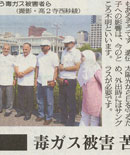
Today, Chokogu Daily released an article reporting on our meeting with the Hiroshima Bombing survivors. Only God and, of course, the Japanese knew what the article had written about.
Officials of the daily voiced their intent to arrange a meeting between the chemically injured members of the Iranian delegation and a number of students from Hiroshima. Dr. Khateri advised me to attend the meeting.

| |

|
|
1st Global Conference - Testimony:
This inaugural conference aims to examine the evolving genres and emerging contexts of testimonial production Testimony: Memory, Trauma, Truth, and Engagement. Broadly understood, testimony is an autobiographical narrative that presents evidence of first-person accounts of human rights abuses, violence and war, and life under conditions of social oppression. It is a genre that continues to thrive and evolve in the twenty-first century and one that encompasses a diversity of expression or representation - from oral to written as well as nonfictional to fictional.
| |
|
|
With photos and oral history, a new book
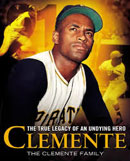
With photos and oral history, a new book portrays Roberto Clemente mostly through the eyes of his family.
"There was so much pressure being Roberto Clemente, at that moment, I didn't want to be Roberto Clemente."
Pittsburgh Pirates legend Roberto Clemente has been gone for more than 40 years, but his name remains the one most closely tied to the franchise. Many fans even claimed there was no way that Clemente's number, 21, would be tied to 21 consecutive losing seasons.
| |
|
|
The Bard Graduate Center Craft, Art, and Design Oral History Project
www.bgccraftartdesign.org is an online archive of illustrated oral history interviews with contemporary craftspeople, artists, and designers. The interviews consist of transcripts accompanied by photographs of the makers and their work; some also feature audio and video clips. The interviewees come from many fields: studio craft in wood, ceramics, fiber, glass, metal, and mixed media; architectural, industrial, graphic, fashion, and costume design; and sculpture and installation art. Topics discussed include background and education, aesthetics, goals, career choices, and the marketplace.
| |
|
|
ORAL HISTORY: A Collaborative Method of (Auto)Biography Interview (Part III)
In the last two weeks Part I & II of this article were presented. Now here is Part III:
Storytelling and Narrative Styles:
During the oral history interview the research participant assumes the role of narrator and tells their story. This is a collaborative process of storytelling involving both the narrator and interviewer. The narrator tells their story, but the interviewer fosters the narration through the listening and observational techniques described earlier. In addition to the spoken word itself, the way in which a participant tells their story is itself recognized as an important knowledge source by oral historians.
| |
|
|
Oral History Weekly Magazine Aims and Regulations
Oral History Weekly Magazine wishes to create a suitable place for thoughts and idea development; Its main field would be “Oral History” and subjects as telling & writing memoirs, writing diaries, travelogues, chronologies, and all other subfields of history which are presented in the form of news, articles, reports, notes, interviews and memoirs can be included. There is no limitation on the length of would-be-sent materials.
Mentioning the name, academic background and email is necessary. Articles with complete references and bibliography are more credited and an abstract would quite helpful.
Weekly is not about to publish any material consisting insults and libels about other people or anything that brings anxiety to public opinion. Weekly can edit and translate the received materials.
The published articles and materials are only the writer’s ideas and Oral History Weekly Magazine has no responsibility about their content.
|
|
|

● Islamic Revolution in Urumia and criticism on left memories in Iran
● “The Foot that Left Behind” translated into Spanish
● Memories and documents about religious currents
● 2nd volume of Martyr Baqeri’s life to be released
● Memories of Nahravan Concentration Camp
● Memories of Jalal and Shams Al-e Ahmad's niece Released

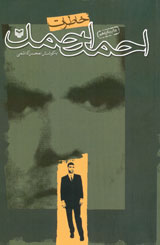
Ahmad Ahmad Memoirs (61)
Edited by Mohsen Kazemi
Soureh Mehr Publishing Company
(Original Text in Persian, 2000)
Translated by Mohammad Karimi
Fresh Air
My main concern was separation from MKO hopelessly. I checked different ways in my mind which I had disappointedly tested some of them and some needed the essentials inaccessible. |


|
|