| |
|
Hiroshima Travelogue- Episode 12

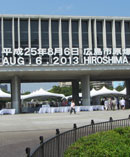
We started out for the Peace Museum earlier than the other mornings. We wore specially designed shirts and hats with emblems of Tehran Peace Museum on them. It wasn’t very long to the Peace Park as it would take the slowest of us some 20 minutes to get there. We were supposed to be there before 8.
The young stewards at the Park received every guest with a flower. Others would hand us the program timetable in English and Japanese. One of them told us it is a tradition to keep the flowers and lay them at the monument of the bombardment victims as the program is over.
The seats were preset for every group of the guests. We were guided to one side of the setting where Japanese hosts awaited us. They showed us our seats and gave everyone a bottle of cool water. The sun was about to rise and the shadows were diminishing.

| |

|
|
ORAL HISTORY: A Collaborative Method of (Auto)Biography Interview (Part II)
Last week Part I of this article was presented here. Now here is Part II: During data collection, oral history relies on recording verbal communication between the researcher and research subject. We can break this down further and say that oral history is dependent on two techniques which foster the flow of data: talking and listening. Before a story is even told the interviewer and interviewee can begin to understand how to listen and talk in the context of producing a life narrative. It is important that the interviewer and interviewee begin to create a rapport prior to the first recorded interview session (if possible), a rapport which they must attend to throughout the interviewing process. While rapport is always dialectical, the primary responsibility is with the researcher who has initiated the research process. This may mean some preliminary discussions so that both parties feel comfortable with each other and begin to become familiar with each other’s “talk style.”
| |
|
|
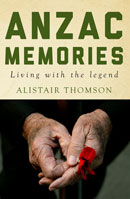
ANZAC Memories
Anzac Memories was first published to acclaim in 1994, and has achieved international renown for its pioneering contribution to the study of oral history and war memory.
Michael McKernan wrote that the book gave ‘as good a picture of
the impact of the Great war on individuals and Australia as we are likely to get in
this generation’. Ian McGibbon concluded that 'anyone interested in the limitations and potentialities of oral testimony will find Anzac Memories an absorbing study'.
| |
|
|
Afghans oral history sets the record straight
FOR most Canadians, the word "Afghanistan" conjures up images of terrorists in training, wounded troops and Taliban forces.
Everyday Afghan people rarely made headlines. Until now. Researchers at the University of Winnipeg's Oral History Centre are documenting the experiences of young people who fled Afghanistan and settled in Winnipeg.
"Canada has a history of involvement in Afghanistan and most of what we know comes from the media," said project leader Allison Penner.
| |
|
|
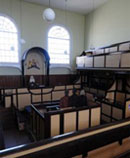
Have you been in the dock at old crown court?
A council is seeking former criminals to help them tell the history of an old courtroom.
West Dorset District Council wants to hear from anyone who may have appeared in the dock, served on a jury or worked at the old Crown Court in Dorchester.
The Shire Hall Oral History Project is linked to plans to turn the Shire Hall in High West Street into a major visitor centre. These plans could see the Grade I listed building transformed into an internationally important heritage centre.
| |
|
|
Oral History Weekly Magazine Aims and Regulations
Oral History Weekly Magazine wishes to create a suitable place for thoughts and idea development; Its main field would be “Oral History” and subjects as telling & writing memoirs, writing diaries, travelogues, chronologies, and all other subfields of history which are presented in the form of news, articles, reports, notes, interviews and memoirs can be included. There is no limitation on the length of would-be-sent materials.
Mentioning the name, academic background and email is necessary. Articles with complete references and bibliography are more credited and an abstract would quite helpful.
Weekly is not about to publish any material consisting insults and libels about other people or anything that brings anxiety to public opinion. Weekly can edit and translate the received materials.
The published articles and materials are only the writer’s ideas and Oral History Weekly Magazine has no responsibility about their content.
|
|
|

● Translation of “The Oral History Manual” published
● Oral history books of cultural advisors unveiled
● “Shariati” in the mirror of oral history
● Gorgan’s Oral History Center launched
● Pages from oral literature in Ardebil’s colloquial culture
● Two memory books unveiled
● “Memories of Mohammad Hashemi” released
● Heidar Khan Memoirs and life of Abbas Iqbal Ashtiani released
● Funny memoirs of sportswomen to be compiled
● An interview about director’s life
● Afghan combatants’ memories compiled

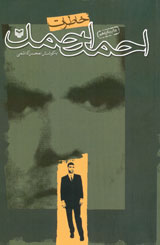
Ahmad Ahmad Memoirs (60)
Edited by Mohsen Kazemi
Soureh Mehr Publishing Company
(Original Text in Persian, 2000)
Translated by Mohammad Karimi
The Sad Destiny
Parviz and Khosrow (Ali and Ali Asghar Mirza Ja’far Allaf) who were living with us in the same team-house had the same positions as mine. They were also shocked badly with the newly created conditions. They had been suggested to choose one of two choices. They could remain in MKO and follow its strategies and keep their Islamic believes secret and personal. MKO was promising them it would create an Islamic branch for the Muslim comrades. The second choice them was going abroad and continuing the struggle there. There was a third choice too, but never said. |


|
|