| |
|
Hiroshima Travelogue - Episode 11

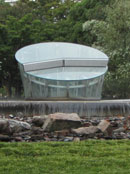
We move out of the Chugoku daily; exactly called the Chugoku Shimbun daily. They say it circulates some 700,000 copies every day. It will publish an article about the meeting between members of [Iran’s] Peace Museum (us) and survivors of the atomic bombings of Hiroshima. Here we go to the Peace Park. Everything seems to be ready to the upcoming ceremony. Erected in a corner of the park is a monument to the Hiroshima Bombing with a map of the building at its entrance and a structure at the end with a Japanese epigraph and a large clock showing 8:15; the exact time of the bombing on August 6th 1945.

| |

|
|
IOHA CONFERENCE/MASTERCLASS SCHOLARSHIP APPLICATION FORM
Scholarship application deadline: 15 December2013- For each international conference the IOHA is able to provide small grants for a limited number of participants. The IOHA Conference/Master Class Scholarship Fund aims to bring together international oral history scholars from inside and outside the academic realm, to continue building a unique global platform for professional exchange and comparative oral history inquiry.
| |
|
|
Voices of Science: launch of new British Library website
Voices of Science: the lives of British scientists recorded in full for the first time in a new British Library oral history archive.
A major oral history project to gather the life stories of British scientists has culminated today in the launch of a new online archive by the British Library. 'Voices of Science' at www.bl.uk/voices-of-science, is drawn from a National Life Stories programme 'An Oral History of British Science', and features interviews with over 100 leading UK scientists and engineers, telling the stories of some of the most remarkable scientific and engineering discoveries of the past century as well as the personal stories of each individual.
| |
|
|
The Digitization and Democratization of Oral History
In the field of oral history, nothing has been more prominent and consequential over the last two decades than the digital revolution. High quality and affordable audio and video recorders have greatly extended oral history practice; not only is there more oral history being done, it is being done and thought about very differently. From the collection, preservation and indexing of oral history interviews, to their interpretation and presentation in diverse formats, to new ethical and legal issues, we are in the midst of what Robert Perks and Alistair Thomson, editors of The Oral History Reader, have called one of the four major paradigm shifts in the field since World War II. As Michael Frisch and Douglas Lambert have recently written, "Almost every traditional assumption about the collecting, curation, and uses of oral history is collapsing in the digital age."
| |
|
|
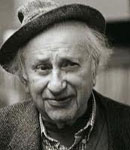
Working on Labor Day with Studs Terkel
Studs Terkel was a master storyteller, or maybe story-listener. His oral histories showed that with the right ear, he could make an interview something special -- he got to the heart of things, to the hearts of people.
His book "Working: People Talk About What They Do All Day and How They Feel About What They Do," published in 1974, became a smash hit -- in Terkel's hands, the work lives of everyday people became fascinating.
| |
|
|
ORAL HISTORY: A Collaborative Method of (Auto)Biography Interview (Part I)
Storytelling is a natural part of the human experience. Human beings communicate meaning through talk. Oral historians have harnessed this tradition of transmitting knowledge and created an important research technique that allows the expression of voice. While storytelling has a deep history, the adaptation of this human process into a legitimated research method is relatively new. Oral history was established in 1948 as a modern technique for historical documentation when Columbia University historian Allan Nevins began recording the memoirs of persons significant in American Life.
| |
|
|
Oral History Weekly Magazine Aims and Regulations
Oral History Weekly Magazine wishes to create a suitable place for thoughts and idea development; Its main field would be “Oral History” and subjects as telling & writing memoirs, writing diaries, travelogues, chronologies, and all other subfields of history which are presented in the form of news, articles, reports, notes, interviews and memoirs can be included. There is no limitation on the length of would-be-sent materials.
Mentioning the name, academic background and email is necessary. Articles with complete references and bibliography are more credited and an abstract would quite helpful.
Weekly is not about to publish any material consisting insults and libels about other people or anything that brings anxiety to public opinion. Weekly can edit and translate the received materials.
The published articles and materials are only the writer’s ideas and Oral History Weekly Magazine has no responsibility about their content.
|
|
|

More than 17,000 sheets of historical documents have been appraised and received special IDs in the Management of Documents and Press Affairs of the Organization of Libraries and Museums and the Center for Astan-e Qods Razavi Document in the first half the current Iranian year (ending March 21st, 2014).
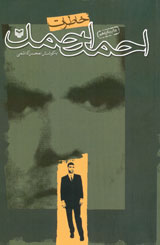
Ahmad Ahmad Memoirs (59)
Edited by Mohsen Kazemi
Soureh Mehr Publishing Company
(Original Text in Persian, 2000)
Translated by Mohammad Karimi
Neglecting the Kids
MKO had occupied our time and life completely. We had forgotten many affairs of our personal life. One of them was neglecting our kids’ rights. Neither my wife nor I noticed the natural rights of our kids. I was drowned in organization’s affair, trainings, rendezvous, and copying the statements & pamphlets; and Fatima was busy with trainings inside groups and studying different books. We could not be good parents for Maryam and Zahra and fulfill them with necessary love of a mother and father.
For taking care of Maryam and Zahra we had a program. One of them had to be kept at my mother-in-law’s house and the other with ourselves. We would change their place with each other periodically. Whenever they were sick we would keep them there to be cured and healthy.
As I told before my twins also would serve MKO activities despite beings only small kids. The students would take Maryam or Zahra in their arms as a sign of being married when they wanted to find a house to rent.
One day my wife and I were at home sitting in a room. I was reading newspaper and Fatima a book. My one year old daughter, Maryam, was creeping this side and that side. |


|
|