| |
|
Hiroshima Travelogue - Episode 10

After a breakfast, we set out for a visit from Chugoku Shimbun daily. We gather at the entrance of the inn; there is no more a fat driver waiting for us. The bus is changed as is its driver. It is not a long journey.
The newspaper headquarters is in a large white building beside the Peace Park. We head to the second floor, where gatherings should be held. They set us a number of tables and chairs to be seated in a round shape. We also get coffee, cakes and note books on our tables.
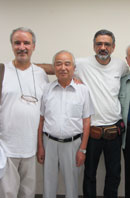
Three elderly men take seats on one side of the arrangement; the three are survivors of the atomic bombardment of Hiroshima; on our side are a number of aged survivors of Iraq's chemical strike against Iran.

| |

|
|
JSC Oral History Project
Established in 1996, the goal of the NASA Johnson Space Center Oral History Project (JSC OHP) is to capture history from the individuals who first provided the country and the world with an avenue to space and the moon. Participants include managers, engineers, technicians, doctors, astronauts, and other employees of NASA and aerospace contractors who served in key roles during the Mercury, Gemini, Apollo, Skylab, and Shuttle programs.
| |
|
|
Cambodian instruments strike a cultural chord in downtown Modesto
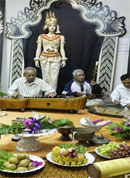
Mao Roth, Ham Touch, Yonn Vath, Leav Yai, Chhip Chhoun, and Muy Kim perform (10-18-13). Traditional Cambodian music played for weddings and classical pieces were performed by the local musicians from the Bridge at the Peer Recovery gallery that is featuring Cambodian art during the month of October.
Traditional Cambodian instruments and music took the spotlight as part of a month long art and culture exhibit at the Peer Recovery Art Project in downtown Modesto.
| |
|
|
Library of Congress Receives Collection of Oral Histories from Prominent African Americans
The National Visionary Leadership Project (NVLP) has donated more than 200 original videotaped interviews from prominent African Americans to the Library of Congress. These oral histories, housed in the American Folklife Center, are the seed of what will be an open collection that will grow in the coming years.
The National Visionary Leadership Project Collection of African American Oral Histories includes interviews with Maya Angelou, Edward Brooke, Elizabeth Catlett, Ray Charles, Shirley Chisholm, Ossie Davis, Ruby Dee, Katherine Dunham, Myrlie Evers-Williams, John Hope Franklin, Dorothy Height, Quincy Jones, B.B. King, Coretta Scott King, Joseph Lowery, Toni Morrison, Gordon Parks, Sidney Poitier, Charles Rangel, Percy Sutton, Douglas Wilder and Andrew Young. Transcripts of the interviews, along with photographs of the interviewees, are included in the donation.
| |
|
|
At 107, nation’s oldest veteran helps preserve Texas history
Our country’s veterans are living, breathing history—and luckily there’s a state program to preserve their message.
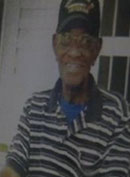
Voices of Veterans aims to protect the legacy of veterans all over Texas. Thursday, officials with the program interviewed the nation’s oldest surviving World War II serviceman, Richard Overton of East Austin.
Overton is 107 years old, and doesn’t think twice about partaking in some of society’s indulgences. You can find him enjoying 12 cigars a day and a nice bourbon.
"I just drink any kind of whiskey,” he said. “I don't care."
Overton was drafted for service in his mid-30s. He was old by military draft standards.
"Uncle Sam says, when he gets his hand on you, 'You got to go,'" he said. "You wouldn't want to go through what I went through, but you had to go through it."
| |
|
|
Oral History Weekly Magazine Aims and Regulations
Oral History Weekly Magazine wishes to create a suitable place for thoughts and idea development; Its main field would be “Oral History” and subjects as telling & writing memoirs, writing diaries, travelogues, chronologies, and all other subfields of history which are presented in the form of news, articles, reports, notes, interviews and memoirs can be included. There is no limitation on the length of would-be-sent materials.
Mentioning the name, academic background and email is necessary. Articles with complete references and bibliography are more credited and an abstract would quite helpful.
Weekly is not about to publish any material consisting insults and libels about other people or anything that brings anxiety to public opinion. Weekly can edit and translate the received materials.
The published articles and materials are only the writer’s ideas and Oral History Weekly Magazine has no responsibility about their content.
|
|
|

A conference revolving around oral history, its conception, method and searching fields in the social, cultural, political and economic areas of the Arab world will be held by the Arab Institute for Political Research and Studies (dohainstitute.org) in Beirut from 21st to 23rd February of 2014.

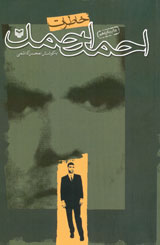
Ahmad Ahmad Memoirs (58)
Edited by Mohsen Kazemi
Soureh Mehr Publishing Company
(Original Text in Persian, 2000)
Translated by Mohammad Karimi
Serial Events
Few days after visiting Taqi Shahram, MKO ordered me to evacuate the team-house in Bouzarjomehri Street and rent a new one where in which Khosrow and Parviz could stay at nights. They were in Sabalan Street team-house. My wife who was skilled in this task could find a good place somewhere near Qiyam (Shah) Square neighboring Imam Sadegh Technical High School. Few days later we could buy some second hand furniture from Fouziyeh (Imam Hussein) Square and take there.
I introduced myself as “Ahmad Akbari” to the householder and I told her that I was a worker in Abyek Cement Factory in Qazvin and I would be there only for one or two nights a week and my wife would be at her parents’ house most of the time. The householder was a widow who had to take of several kids and it was so good for her that we were not staying there so much. The situation of that house was in a way that we were able to run away from the roof and neighboring alleys easily if someone wanted to arrest us. |


|
|