| |
|
Hiroshima Travelogue- Episode 9

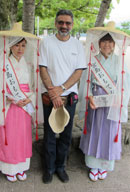
We are taken to another beach the next morning to visit another isle. There are vessels to carry only human passengers from the beach to the isle. The vessels which were used for going to the Econojima isle could carry cars as well. The vessel breaks through the beautiful water to the isle. The green heights of the isle can be seen from the vessel. A little further, a religious sign can be seen in the water near the isle.

| |

|
|
Video technology assists in preservation of oral history
Oral history may be the single most valuable tool in preserving local history. It is the collection of historical information through interviews with knowledgeable sources, using audiotape and videotape.
“Oral history makes it all come alive, much more than reading a textbook about it. It helps you relate it to your own family or community,” Carthage College history professor Tom Noer said.
“History is what we select from the past that’s important. What’s important is often not just World War II, but the daily life of people during World War II,” Noer continued. “And you need to look at the average person, not just the important people.”
| |
|
|
Into the digital, oral era
Much in the tradition of oral history, the new media online has an oral impulse both in terms of its freewheeling spokenness and in its drawing on the opinions and experiences of a teeming cross section of society.
AS we lurch into a future mediated by digital technology, we cannot but notice that the oral has returned with a bang and vies with the written to exemplify our communication and expression. It is not just that in this interactive, multimedia-enabled ambience, video, audio and text can combine seamlessly; that you can see what you hear what you read. Even what may be only written acquires an orality; a manner of “oral writing” comes into force — somewhat as envisaged by Jacques Derrida as he rescued writing from subservience to speech, to which influential intellectual opinion had, for long, relegated it.
| |
|
|
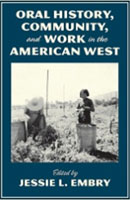
Oral History, Community, and Work in the American West
Nurses, show girls, housewives, farm workers, casino managers, and government inspectors—together these hard-working members of society contributed to the development of towns across the West. The Essays in this volume show how oral history increases understanding of work and community in the twentieth century American West.
In many cases occupations brought people together in myriad ways. The Latino workers who picked lemons together in Southern California report that it was baseball and Cinco de Mayo Queen contests that united them.
| |
|
|
Amy’s Notebook: Talking Delta Kibbe in Oklahoma
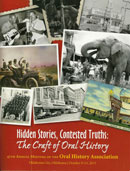
Last week, I traveled to Oklahoma City, Oklahoma, to attend the Oral History Association’s Annual Meeting. Held in a different location each year, the gathering is designed to “offer opportunities to learn, discuss, and review almost every aspect of oral history practice.” This year’s theme was Hidden Stories, Contested Truths: The Craft of Oral History. I’ve been a member of the OHA for some time, but this was my first time to attend the annual meeting. I am so glad I did.
| |
|
|
Oral History Weekly Magazine Aims and Regulations
Oral History Weekly Magazine wishes to create a suitable place for thoughts and idea development; Its main field would be “Oral History” and subjects as telling & writing memoirs, writing diaries, travelogues, chronologies, and all other subfields of history which are presented in the form of news, articles, reports, notes, interviews and memoirs can be included. There is no limitation on the length of would-be-sent materials.
Mentioning the name, academic background and email is necessary. Articles with complete references and bibliography are more credited and an abstract would quite helpful.
Weekly is not about to publish any material consisting insults and libels about other people or anything that brings anxiety to public opinion. Weekly can edit and translate the received materials.
The published articles and materials are only the writer’s ideas and Oral History Weekly Magazine has no responsibility about their content.
|
|
|

The radio show “Yad Nameh” or Letter of Memories produced by Akbar Nik Ayeen has been allocated to the recoding of oral history in radio in three collections, interviewing radio veterans.

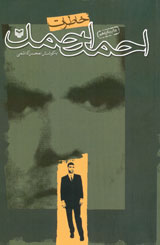
Ahmad Ahmad Memoirs (57)
Edited by Mohsen Kazemi
Soureh Mehr Publishing Company
(Original Text in Persian, 2000)
Translated by Mohammad Karimi
Taqi Shahram who was really angry of me would permanently use labels like well-off petit bourgeois, right-winged pseudo-leftist opportunist (1) and reactionary for me. He told Iraj: "This well-off petit bourgeois still cannot identify the status of workers." I said: "It's you the one who do not identify; you've used the money of these workers, Muslims and the nation, and now you are turning your back to them." He said: "This is our right and we have led the stream of struggle and this is our right to use their facilities." I asked: "What will happen to other Muslim comrades?" he said: "All have accepted the ideology change. Few are remained like you that we will let them to keep their religious believes individually only. But they should remain beside us in our struggle. Right now is not the time of division and separation and keeping the unity is a rule. You cannot understand what we say now. |


|
|