| |
|
Hiroshima Travelogue - Episode 6

A set of pictures get your attention at the newly-built hall of Iran’s embassy. The structure was added to the Iranian embassy’s complex about 11 years earlier. The set comprises three historical shots, two Persian and Japanese captions and a badge; Nasseredin Shah, Masaharu Yoshida and Magoichirō Yokoyama are in the shots, and the badge is the Iranian Order of the Lion and the Sun. The caption reads as follows:
“Masaharu Yoshida and Magoichirō Yokoyama were members of the first official delegation sent to Iran in 1880 by Emperor Meiji to transfer the message of friendship to the Iranian king. During a meeting, the Iranian king offered the two Japanese messengers a silver order of the Lion and the Sun. The badge was offered to the Iranian embassy by Mrs. Ikawa, a granddaughter of Magoichirō Yokoyama, on 29/10/2011.”

| |

|
|
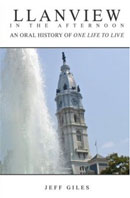
Llanview in the Afternoon
If you have watched One Life to Live over any, or all, of its over four decades of existence, and want to get a glimpse of what it was like throughout all the different casting, writing, and producing regime changes, and read some never- before- known moments that happened on the set, and behind-the-scenes of one of the most iconic soaps of all-time, then you should order your copy of the just released paperback book or kindle version of Llanview in the Afternoon: An Oral History of One Life to Live by Jeff Giles!
| |
|
|
Oral History Projects Document Hurricane Sandy
The first anniversary of Hurricane Sandy (or Super Storm Sandy, as it is known in New Jersey) striking the Mid¬Atlantic is October 29, 2013, and a number of oral history projects have emerged to begin to collect and document the storm's effect on the coastal communities of New York and New Jersey.
Oral history projects have sprung up around the regions hit hardest by Sandy, many of them sponsored by local universities and libraries. Hurricane Sandy: Record, Remember, Rebuild is an online collaboration between Google, the Metropolitan New York Library Council, the Society of American Archivists, and the American Association for State and Local History.
| |
|
|
New course keeps local history alive
A group of librarians, rangers, conservationists and community members are helping to keep local history alive through an engaging new study.
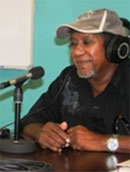
The nationally accredited oral history course was recently launched in Broome by well-known local oral historian Dr Elaine Rabbitt, to help interested people become qualified in recording community history.
Dr Rabbitt wrote the course in conjunction with Oral History WA, and counts as a unit of competency in a certificate IV qualification.
The three-part training teaches beginners how to record and document personal stories through interviews using digital recorders.
Participants from Broome and Derby enrolled in the course, and attended the workshops led by Dr Rabbitt at Nirrumbuk Aboriginal Corporation.
| |
|
|
2014 Annual Meeting Call for Papers
Motion suggests many things: action and transformation; dynamism and fluidity; migration and the power to move. By its very nature, oral history is constantly in motion – in the evolving relationship between the two parties in an interview; in the interplay between the past and the present; in conjunction with emergent technologies and diverse applications. Oral history also has played a crucial role in documenting and understanding the central movements of our time, from a broad array of social movements to transnational migrations.
| |
|
|
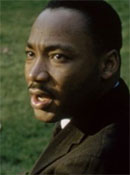
Our lessons with Martin Luther King: Eight students recall a special class (2)
Charles A. Black was involved in organizing so many sit-ins his nickname became "Sit Down Black." His friend and fellow civil rights leader Julian Bond says Black still leaves voice mail messages using that moniker.
Charles Black recalls his teacher's "horrible monotone; it was nothing like how he sounded when he was giving a speech."
After college, he went on to run a consulting business with Bond and other civil rights leaders like John Lewis and Lonnie King. It helped supply a more diverse workforce to government offices. Today he continues his civil rights work, in addition to acting and voice work for TV and films.
What I remember about the class is that it met for two hours in the afternoon not even for a full year. My ex-wife told me I had to stop saying this, but I thought at the time it was generally pretty boring.
| |
|
|
Oral History Weekly Magazine Aims and Regulations
Oral History Weekly Magazine wishes to create a suitable place for thoughts and idea development; Its main field would be “Oral History” and subjects as telling & writing memoirs, writing diaries, travelogues, chronologies, and all other subfields of history which are presented in the form of news, articles, reports, notes, interviews and memoirs can be included. There is no limitation on the length of would-be-sent materials.
Mentioning the name, academic background and email is necessary. Articles with complete references and bibliography are more credited and an abstract would quite helpful.
Weekly is not about to publish any material consisting insults and libels about other people or anything that brings anxiety to public opinion. Weekly can edit and translate the received materials.
The published articles and materials are only the writer’s ideas and Oral History Weekly Magazine has no responsibility about their content.
|
|
|

The internet website of Iran's Local History has been launched. Its address is http://localhistory.ir. The site is affiliated to Iran's Local History Association and aimed at dealing with Iranian local historiography.

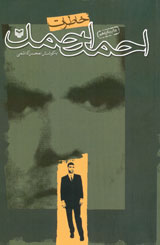
Ahmad Ahmad Memoirs (54)
Edited by Mohsen Kazemi
Soureh Mehr Publishing Company
(Original Text in Persian, 2000)
Translated by Mohammad Karimi
Assassinations and Changes
In late 1975 winter MKO via Iraj ordered us to afford a 7-meter black veil. We were surprised with this matter; “…7-meter black veil!? What for?” Black veils were usually 6 meters. Finally we could find it. Few days later they gave us an announcement to print and copy. In announcement No. 21 they had mentioned how they had assassinated Gen. Zandipour. The late Morteza Samadiyyeh Labbaf and few other members of MKO had done it. Samadiyyeh was a tall man and then we understood why they had asked for a 7-meter black veil. They wanted it to use at the time of assassination.
The point that I noticed in the announcement was the small size of the Koranic verse “… God has preferred those who fought over those who stayed behind with a great wage” [Chapter 4: AN-NISA (WOMEN) - Juz' 5, Verse 95] on top of MKO coat of arms. At first I was suspicious about it but later I satisfied myself by thinking that it was only because of technical graphic reasons for more beauty or effectiveness.
In the middle of May the next year (1975) we heard that Majid Sharif Vaqefi had been martyred. We knew him as a Muslim revolutionary leader and would respect and like him a lot. We got so sad of hearing about his death. His death and the news about were paradoxical and would make any listener suspicious. I felt some horrible events were happening. Death of Majid doubled this ambiguity and suspicion about the atmosphere around. (1)
About 21st of May 1975 two MKO members, Vahid Afrakhteh and Mohsen Khamoushi, assassinated two American advisers.(2) Iraj instantly brought us the 22nd martial announcement about this terroristic attempt. I was shocked when seeing that announcement; the Koranic verse on top of MKO coat of arms had been omitted. |


|
|