| |
|
Hiroshima Travelogue - Episode 5

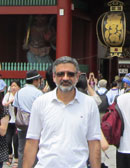
Today, I cruised the streets of Tokyo; the city abounds with long and narrow streets, underpasses, footbridges, cars, discipline. The many locks attached on every lamp post and public telephones and the nuts and bolts used in iron structures are evident of the fact that quakes are on a constant go in the city and, probably, its neighboring towns. Humidity is also considerable. All the essentials of the city are made of iron strictures and rust is born where of iron and humidity are together.
A meeting is arranged at Iran's embassy in the afternoon between members of the Peace Museum and Iranians living in Tokyo. Everyone is invited to listen to the addresses made by some of the visitors. In his opening speech, Dr. Shahryar Khateri delivers a report on the professional and emotional links in the past ten years between Iranian and Japanese doctors and survivors of mass destruction weapons, both atomic and chemical.

| |

|
|
Oral History of York University
Gregory Neale of the Oral History Project, History Professor Mark Ormrod, Vice Chancellor Brian Cantor, and students Megan Hollinghurst and Katy Gibson discuss the rationale and reasoning behind the Oral History project.
The University of York opened its doors to its first students in the autumn of 1963. York's oral history project is making audio recordings of the recollections of people who have been involved with the University during the past half-century and more – from some of those present at its inception to alumni and current members of staff.
Among those already interviewed are Sir Donald Barron, who from the late 1950s was Treasurer of the York Academic Trust – the group that successfully campaigned for the University to be established – and Sir Andrew Derbyshire, the architect who shaped the original Heslington campus.
| |
|
|
OCEANIA, AUSTRALIA
Renée Shuttleworth, from the National Library of Australia reports on the recently completed ‘Forgotten Australians and Former Child Migrants’ oral history project, a large scale social history project undertaken by the National Library of Australia which recorded interviews with adults who experienced institutional and out-of- home care as children in Australia.
‘The now completed three year project was supported and funded by the Australian Government through the Department of Families, Housing, Community Services and Indigenous Affairs. It is estimated that 500,000 Forgotten Australians and 6,000 Former Child Migrants from the UK and Malta, spent their childhood in some 800 institutions across Australia throughout the twentieth century.
| |
|
|
Public Symposium: Magdalene Institutions
Magdalene Institutions: Recording an Oral and Archival History is a Government of Ireland Collaborative Research Project funded by the Irish Research Council and conducted at UCD Women’s Studies Centre under the direction of Dr Katherine O’Donnell. This symposium addresses key outcomes of the project as it comes to a close and is co-hosted by SIPTU Campaigns and Equality and the National Women’s Council of Ireland, who have supported the campaign to bring justice for the Magdalene women.
| |
|
|
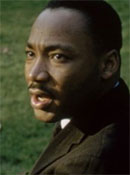
Our lessons with Martin Luther King: Eight students recall a special class (I)
Atlanta (CNN) -- Martin Luther King Jr. taught exactly one class his entire life. It was in 1962 in Atlanta -- a year before he would give his "I Have a Dream" speech in the nation's capital.
King had just moved back to his hometown to become co-pastor at Ebenezer Baptist Church, where his father was in the pulpit. The church was such an influential voice, the King family was considered royalty in the city's African-American community.
After leading the Montgomery bus boycott of the mid-'50s, King was nationally known in his own right. The international fame that would follow the Nobel Peace Prize had yet to come.
To many of the students in his class at Morehouse College -- King's alma mater -- he was considered a mentor, even a member of the family.
| |
|
|
Oral History Weekly Magazine Aims and Regulations
Oral History Weekly Magazine wishes to create a suitable place for thoughts and idea development; Its main field would be “Oral History” and subjects as telling & writing memoirs, writing diaries, travelogues, chronologies, and all other subfields of history which are presented in the form of news, articles, reports, notes, interviews and memoirs can be included. There is no limitation on the length of would-be-sent materials.
Mentioning the name, academic background and email is necessary. Articles with complete references and bibliography are more credited and an abstract would quite helpful.
Weekly is not about to publish any material consisting insults and libels about other people or anything that brings anxiety to public opinion. Weekly can edit and translate the received materials.
The published articles and materials are only the writer’s ideas and Oral History Weekly Magazine has no responsibility about their content.
|
|
|

The Oral History Department of the Office of Islamic Revolution Literature of the Art Bureau is planning to publish the book of memoirs of Javad Manosuri about post-revolution years in this year’s Book Week due to be held in late Aban 1392 solar hijri (November 2013).

Ahmad Ahmad Memoirs (53)
Edited by Mohsen Kazemi
Soureh Mehr Publishing Company
(Original Text in Persian, 2000)
Translated by Mohammad Karimi
When Iraj came, forging documents was added to our tasks. We would forge ID cards, passports, and … unskillfully of course. In some cases MKO would give us some ID cards and passports and we would only change the photograph skillfully with a new one and then seal it or change the its number.
Iraj would come to our house before noon and stay there until sunset. But we would not see him saying his prayers. I checked him several times and I became sure that he would not say his prayers. I asked him several times: “why don’t you say your prayers?” and he would say: “I did. You may not have seen. But any way, if you say, I may do it again.” I would say by myself: “Such a surprise! What a believing man he is; we suspect and he says that he would do it again.”
Repetition of such scenes gradually made us sure that he was not behaving frankly. One day he wore my coat and went out. The next day when he came back I found a driving license with his name and photograph in my coat’s pocket. Thus, I found out his real name. (1)
After some time MKO ordered us to find a new secure house. Once again by the activeness of Shapourzadeh we could rent a new house (the second secure house) in Southern Sabalan Street. The owner was an ordinary but happy man named Dadashzadeh.
At the time that Khosrow, Parviz and I were working in an unhygienic workshop for making explosive materials for MKO, Iraj would go to our house for making long discussions with my wife. He would talk with about matters such as: “You have good knowledge in ideological believes but you are not as advances as what your husband is. You are a free woman and should not be dependent to your husband. He is your husband; it true. But you should obey him just in marital affairs not sociopolitical ones. You should increase your political knowledge by reading books. Struggle against the regime has many up and downs and your husband may be killed for his goals. So, if you do not have an independent personality, you would be hurt and cannot continue his way; and at the same time there is no way backward and….”
I always had made many discussions with Fatimah about this plot and had narrated about my experiences in order to make her mind ready to accept the future events. I never impeded her from saying her ideas and I always had tried to make her mind more mature.
Gradually I witnessed some changes in my wife’s mind. Iraj had managed to change her mind more compatible with his own in some cases. I would observe some clear objections from her about my ideas but I would welcome it. I would consider it as signs of mind progress for her personality. Iraj had penetrated to our life just like a bat and gradually had begun sucking the blood of our life. Fatimah reinforced their fake slogans in her mind and by accepting untruthful responsibilities and training works she gradually found a new personality.
House Finding by Shapourzadeh
Fatimah Fartoukzadeh (Shapourzadeh), was a believer, religious woman and a kind companion wife. During my life with her I did not feel anything except believes and religion in her. She voluntarily accepted to join me in the way of struggle against the regime and living secretly. She would try not to move out of my position and viewpoint in ideological classes. She would go out of house sometimes. I would ask her to take a gun with her but she would not accept. She would say: "I must be careful about my veil. I cannot have a gun in hand and keep my veil either." Anyway, she moved this way and by reading many books and participating in classes grew her knowledge in thought and mind.
At the time we were working so hard, my wife lived highly devotedly. She would do all the cleaning and nursing the children and showed a good talent in finding secure houses. By the orders of MKO she could find many secure houses for other teams. She could make a good experience.
When going to find a house she would take one of the twins and go out. She would knock on the doors and ask for water for her kid or a possibility of changing her napkin there. Then she would begin talking with the landlord and ask about a room to rent. Then he or she would show his or her own room for rent and if it was not available would introduce my wife to some other people who might have rooms for renting. Our kid would get cold during these trips. Fatimah would tolerate all these hardships because of her strong divine reason. This kind of house finding without referring to real states had many security reasons. At that time real states had to present a copy of any contract to the local police station. Police stations had to be coordinated with SAVAK to find and arrest political fighters or guerillas in the secure team-houses.
MKO observing the successes of Fatimah in house-finding asked her to share her experience with other teams in ideological classes. Fatimah told me herself that MKO had assigned her teaching house-finding in ten team-houses and it was so important for her. The role of twins was so important in house finding. This would wipe out any suspicion by people in society. The kid got sick several time for this matter. Even the young boys and girls in MKO would take our kids to show they were married and would look for a house and thus they would experience what they had theoretically learned.
One I remember they had taken Maryam with themselves. When they returned I saw that she had burnt her hand. It seemed she had put her hand in the bowl of hot soup at lunch. They would get panicky and cannot do anything for her; they did not know anything about kid nursing. When I saw her burnt hand I got upset and criticized them.
By beginning the hoaxes and tricks of MKO, Fatimah gradually took distance from me day by day. MKO would follow independence in her personality, thinking and ideology very seriously and insist on indifference between men and women in organizational structure. Fatimah had believed this new status and thought it would the only way for her to make progress in her thoughts. She had elementary education and by being located in such status she found a hollow personality and was hurt in an irretrievable way.
MKO following its devil programs for people like me presented a new plan in which the so-called “Sisters” and “Brothers” had to live in separated teams. The obvious goal of this plan was to divide married people in the organization in order to collapse their married lives. By losing marriage responsibilities and creating hollow personalities, they were able to use people for their goals.
Anyway… at that time I strictly believed these activities and accepted that Fatimah could leave our own house to go to this kind of team-houses limitedly. Thus she accepted the responsibility of two team-houses. After the ideology change in MKO everything was reverse. I would stay at home and take care of kids and she would go out for work and activity. Sometime she would not come home for several nights, and if I would not ask her where she had been, she would not tell anything and if I would ask, she would not answer clearly. She would say that she have had classes for some other MKO members. This behavior was something that MKO had wanted. MKO would not let her to reveal her information and activities related with other team-houses. I found out the devil aims of MKO when it was too late and I could do nothing for this misery except waiting…
1- Jamal Sharifzadeh Shirazi was born in Tehran in 1950. His father was watchmaker. His family moved to Iraq in his childhood and they were expelled in 1970. After returning to Iran, Jamal was accepted in an industrial university in Physics Engineering.
At university he got acquainted with MKO and joined it. In the summer of 1975 he joined Taqi Shahram Branch and became his assistant. For some time he was in charge of a group called “Sassanian”. The aim of shaping this group was creating relations with the main cadre of MKO and its supporters and would afford money and needed things for this organization. In November/December of 1975 he killed his brother -in-law, “Reza Khaleqi”, who was a driver in royal court. On 22th of April 1976, SAVAK agents entrapped him along with Taher Mirza Jafar Allaf and Mehdi Mousavi Qumi and all three committed suicide by eating cyanide capsules. |


|
|