| |
|
Hiroshima travelogue - Episode 4

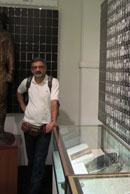
We leave 'The Center of the Tokyo Raids and Was Damage' after taking several pictures with two symbols placed at the entrance door. Next, we head for Yūshūkan military museum in Tokyo. They drive to a different location. Someone says there is the emperor's house over the river and the long borough we are passing. (What is going on in there? Only God would know.)
Meanwhile, many people are jogging along the pedestrian. Is this the same house where Mehdi Gholi Khan Hedayat accompanied with Ataback met with the Japanese emperor on December 20, 1903 (Ramadan 30, 1321 hg)? I don’t know, but I know that the Iranian Hedayat (Mokhber-o-Saltaneh), known as the globetrotter of his time, was as impressed with Japan as was his compatriot, Hedayatollah, almost 110 years later by seeing the [eastern Asian] country.

| |

|
|
Procedures of Audio Recorded Interviews At COLUMBIA CENTER FOR ORAL HISTORY
Our usual procedure, once a project has been organized and funded, is to bring on staff an interviewer either as a consultant or as a part-time employee, to research and conduct the interviews. In recruiting interviewers we seek applicants who have knowledge of the field under investigation and interviewing experience. In particular, we search for someone familiar with the secondary literature, the location and organization of collections of written documents relevant to the interviews, a sense of the historiographical issues involved in the project, and the personality traits of an informed, interested listener.
| |
|
|
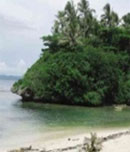
NCCA helps preserve heritage of Laoang and Capul, Northern Samar
Islands are unique because of their biodiversity and their people’s ethnicity, culture and history. But without proper care, it may be difficult to help these communities retain their heritage and identity amid a sea of change.
Celebrating Taoid (“heritage,” in Ilocano), the National Commission for Culture and the Arts (NCCA) paid a visit to Capul Island and Laoang in Northern Samar to hold “heritage clinics” and help preserve local heritage.
“Taoid” is the theme of the year-long celebration of National Heritage Month, marked in May.
The long celebration is the brainchild of the NCCA’s Subcommission on Cultural Heritage (SCH), to develop heritage awareness nationwide.
| |
|
|
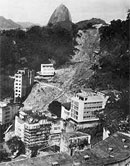
MEMORY AND NATURE IN THE GREAT FLOOD OF 1966
Historians Andrea Casa Nova Maia and Lise Sedrez from the Universidade Federal do Rio de Janeiro (UFRJ University) report on a research project which uses oral history to explore the environmental history of the city of Rio de Janeiro, and to study the history of its floods in the 20th century.
‘Rio de Janeiro, one of the best known cities in the world, will host part of the 2014 FIFA World Cup – and will also host the 2016 Olympic Games. Luckily, both events will take place in June, during the Brazilian winter, because another claim to fame of the Wonderful City is its summer rainstorms – the “waters of March” sung by Tom Jobim, which usually flood large parts of the city. Some rainstorms have remained in popular memory as watersheds that defined the relationship between Rio’s residents (cariocas) and the nature of which they are so proud.
| |
|
|
Oral History Weekly Magazine Aims and Regulations
Oral History Weekly Magazine wishes to create a suitable place for thoughts and idea development; Its main field would be “Oral History” and subjects as telling & writing memoirs, writing diaries, travelogues, chronologies, and all other subfields of history which are presented in the form of news, articles, reports, notes, interviews and memoirs can be included. There is no limitation on the length of would-be-sent materials.
Mentioning the name, academic background and email is necessary. Articles with complete references and bibliography are more credited and an abstract would quite helpful.
Weekly is not about to publish any material consisting insults and libels about other people or anything that brings anxiety to public opinion. Weekly can edit and translate the received materials.
The published articles and materials are only the writer’s ideas and Oral History Weekly Magazine has no responsibility about their content.
|
|
|

The second course of oral history training in Eastern Azerbaijan Province will be held in 14 sessions. The topics of this course are “Recognition of subject in oral history”, “Methods and principles of interview in oral history”, ”Methods and principles of transcription in oral history” and “Writing and edition in oral history”.

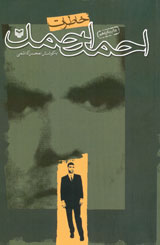
Ahmad Ahmad Memoirs (52)
Edited by Mohsen Kazemi
Soureh Mehr Publishing Company
(Original Text in Persian, 2000)
Translated by Mohammad Karimi
Ways to Survive
From the beginning of secret life our connections with outside of MKO became so limited. Even with our families we had only phone calls. For phone calls we had only to use public phones and finish our dialogues in less than 3 minutes in order not to be tracked. Right in these phone calls I found out SAVAK had referred to my father’s and father-in-law’s houses several times and had asked about me. They even had attacked my father –in-law’s house once and detained his family and him for some hours. They had tried to force my wife’s parents to confess where we had been hidden but nothing was achieved by them. |


|
|