| |
|
Iran to release books on Minorsky

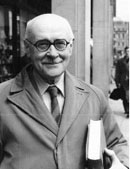
Iranian historian Goudarz Rashtiani will publish two books about Vladimir Minorsky presently. The works will be about the research sources of the Russian Orientalist which present precious information.
IBNA: The books will be about the list of Minorsky’s research sources as well as his life and scientific report.
Vladimir Fedorovich Minorsky was a Russian Orientalist best known for his contributions to the study of Kurdish and Persian history, geography, literature, and culture.

| |

|
|
'Russia from Peter the Great to Our Time'
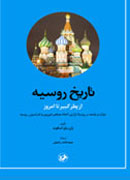
Hamed Razi'ei has translated ‘La russie de pierre le grand a nos jours,’ or ‘Russia from Peter the Great to Our Time’, penned by Jean-Paul Scot, into Persian. The book is published by Amir Kabir Publishing House.
IBNA: 'The History of Russia from Peter the Great to Our Time (Putin)', written by Jean-Paul Scot, makes a thorough survey of the governments and societies from Czarist Russia to the Union of Soviet Socialist Republic and then the Russian Federation.
The gigantic land has faced ups and downs from Peter the Great to Lenin and now Putin, struggling with the opposites, tumults and social unrest. The present book pays a particular attention to the social aspects of the Russian history," said the translator Seyyed Hamed Raziei.
| |
|
|
Oral History in the Video Age
This article examines the role of oral history in a cultural and technical context increasingly dominated by digital video. The author reflects on new opportunities for video oral history, especially regarding access, audience engagement, and innovative partnerships. These opportunities call for new forms of engagement with the academy, with partners beyond the academy, and with the vast and teeming crowd that is the modern digital public.
| |
|
|
Memories of Nazi and Stalinist repression
Peter Coleman, Centre for Research on Ageing, University of Southampton, reports on progress of a project recording older people’s memories of Nazi and Stalinist repression in Eastern Europe funded by the German foundation EVZ ‘Erinnerung Verantwortung Zukunft’ (Remembrance Responsibility Future) and directed by Professors Andreas Kruse and Eric Schmitt at the Institute of Gerontology, University of Heidelberg. Data collection has been coordinated by Andrei Podolskij, Professor of Educational and Developmental Psychology at Moscow State University.
| |
|
|
UCLA's oral historians tell L.A.'s story with community voices
Teresa Barnett and her staff of three at UCLA Library’s Center for Oral History Research have their work cut out for them: Document the history of Los Angeles and its environs. Since its founding in 1959, the center has amassed oral histories by 1,216 interviewees on the history of the film industry, mayoral politics, the civil rights movement and institutions like UCLA, among dozens of subjects. Researchers, book authors, filmmakers and many others tap into the center’s recordings and transcripts.
| |
|
|
Oral History Weekly Magazine Aims and Regulations
Oral History Weekly Magazine wishes to create a suitable place for thoughts and idea development; Its main field would be “Oral History” and subjects as telling & writing memoirs, writing diaries, travelogues, chronologies, and all other subfields of history which are presented in the form of news, articles, reports, notes, interviews and memoirs can be included. There is no limitation on the length of would-be-sent materials.
Mentioning the name, academic background and email is necessary. Articles with complete references and bibliography are more credited and an abstract would quite helpful.
Weekly is not about to publish any material consisting insults and libels about other people or anything that brings anxiety to public opinion. Weekly can edit and translate the received materials.
The published articles and materials are only the writer’s ideas and Oral History Weekly Magazine has no responsibility about their content.
|
|
|

The 2nd Oral History workshop in Hamedan will be held in Hamedan's Holy Defense Garden Museum on 28 Shahrivar 1392 solar hijri corresponding to September 19, 2013 with ...

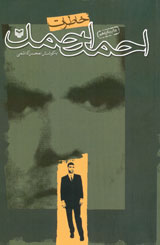
Ahmad Ahmad Memoirs (48)
Edited by Mohsen Kazemi
Soureh Mehr Publishing Company
(Original Text in Persian, 2000)
Translated by Mohammad Karimi
Barrier over Barrier
Endless Interventions by SAVAK
One or two days after being freed I was thinking what I had to do. The responsibility for the new life would not let me be free. I could follow many affairs freely and relaxed because of being unmarried, but after being married and considering my parents’ oldness, I had to think more seriously about my life and activities. My wife had accepted to stay beside me in all up and downs, but I had to think how to make ends meet for my family. Occasional interventions by SAVAK had made it hard me. Besides, many businessmen would present their suitable job positions to me when being informed of my background. |


|
|