| |
|
Audiobook of Leader’s biography recorded

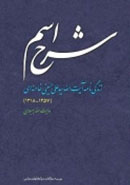
The audiobook of a book entitled as the ‘Name’ has been completed at Iranseda.ir.
IBNA: According to the Islamic Revolution Information Center, the biography of the life of the Supreme Leader of the Islamic Revolution Ayatollah Seyyed Ali Khamenei since his birthday (July 17, 1939) until the victory of the Islamic Revolution has been recorded at the studios of the online radio channel, Iranseda.ir.
The book is read by Hassan Khelghat Doust and is produced by Hoda Moradi.

| |

|
|
New book reveals details about assassination of Che Guevara
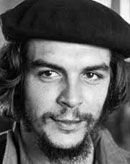
New and irrefutable facts about the assassination of Cuban-Argentinean guerrilla fighter Ernesto Che Guevara are revealed in a new book by Cuban writers and researchers.
IBNA: The book, entitled “The Assassination of Che in Bolivia,” by authors Adys Cupull and Froilan Gonzalez discloses, through testimonies of people linked to the historic events, details of the last hours of the life of Che Guevara before he was killed and buried.
According to the Cuban News Agency, the book, edited by Cuba’s Editora Politica publishing house, will be launched at the 2014 Havana International Book Fair.
| |
|
|
‘Q&A Picasso: Off the Record’ hits bookshelves
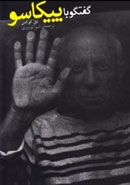
‘Q&A Picasso: Off the Record’, written by Neil Cox and rendered by Shiva Norozi, has been published in Iran. The book recounts Picasso’s memories.
IBNA: ‘Q&A Picasso: Off the Record’ had been translated in Persian before. The book tells the life and memories of the distinguished Spanish painter.
Entitled ‘A Cup of Coffee with Picasso’, the previous Persian rendition by Zeinab Taheri was released in Iran by Shourafarin Publications.
The other translation by Shiva Norozi has been marketed in 112 pages by Nazar Publications.
Pablo Picasso (25 October 1881 – 8 April 1973) was a Spanish painter, sculptor, printmaker, ceramicist, and stage designer who spent most of his adult life in France.
| |
|
|
Ronald Fraser obituary
Gifted and prolific historian of Spain who helped establish oral history as a discipline in its own right
Ronald Fraser moved to Andalusia in 1957 - and found that little had changed since the end of the civil war
Ronald Fraser, who has died aged 81, was one of the most respected, gifted and prolific British historians of Spain. His best-known work, Blood of Spain (1979), is a peerless account of the Spanish civil war, carefully constructed from interviews with participants on both sides. Conducted with a steady and consistently courteous voice, the book helped establish oral history as a discipline in its own right. Ronnie disliked the description – "as though it were a category of historiography on a par with 'economic' or 'political' history rather than what it actually is: the creation of new sources to further historical research."
| |
|
|
East Park Place Memories: Oral history project begins
An oral history project under way in the East Park Place neighborhood will provide a wealth of information about the neighborhood that was severely impacted by the 2008 flood.
When all of the 41 properties purchased in a buy-out have been moved or demolished, “the majority of the neighborhood will be lost,” City Planner Tricia Sandahl said.
Located north of East Park and west of the Mason City Aquatic Center, East Park Place is bounded by North Carolina Avenue, Ninth Street Northeast, the Mason City Family Aquatic Center and the Winnebago River.
“It’s a big historic district,” Sandahl said. “It’s an interesting neighborhood and it’s a unique neighborhood. It has a mix of ethnic backgrounds, a mix of income levels, a mix of professions and an architecturally diverse mix of housing.”
Many of the residents have lived there for years.
Houses date from 1910 to the 1950s.
A majority of the houses in East Park Place have not undergone significant exterior modification, Sandahl said.
| |
|
|
Oral History Weekly Magazine Aims and Regulations
Oral History Weekly Magazine wishes to create a suitable place for thoughts and idea development; Its main field would be “Oral History” and subjects as telling & writing memoirs, writing diaries, travelogues, chronologies, and all other subfields of history which are presented in the form of news, articles, reports, notes, interviews and memoirs can be included. There is no limitation on the length of would-be-sent materials.
Mentioning the name, academic background and email is necessary. Articles with complete references and bibliography are more credited and an abstract would quite helpful.
Weekly is not about to publish any material consisting insults and libels about other people or anything that brings anxiety to public opinion. Weekly can edit and translate the received materials.
The published articles and materials are only the writer’s ideas and Oral History Weekly Magazine has no responsibility about their content.
|
|
|

Director of Memories for All Seasons, Mostafa Razzaq Karimi declared that his documentary will go on the screen in Hiroshima.

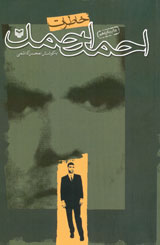
Ahmad Ahmad Memoirs (44)
Edited by Mohsen Kazemi
Soureh Mehr Publishing Company
(Original Text in Persian, 2000)
Translated by Mohammad Karimi
On the third day, the cell’s gate was open and then a tall strong young man was thrown in. His face was so worried. It seemed that it was the first time that he was experiencing such a place. After few moments he began talking and said that he was a javelin throwing champion and did not know what the reason was for his arrest. Unfortunately his interrogator was someone whose name was “Danesh”. He was a bad tempered wretched man who would harass his prisoners a lot. The next day, they took the champion for interrogation. Danesh used Apollo for torturing him and he did it so savagely. That afternoon when I was resting on the ground of my cell, suddenly I saw two bloody feet through the opening on the bottom of the door of my cell. I stood up. The door penned and they threw the champion in. He could not stand on his feet and fell down so hard by his head and chest. His feet were bloody and infected. I got closer to him and put his head on my lap and turned his face to my face. I saw that he was dying. He would croak when breathing. I found out that blood had closed his windpipe. I opened his throat by a spoon and took out the blood and infections in his mouth. Then he could make big breath and then fainted. I moved him with the help of other person in the cell.
|


|
|