| |

|
Literature-Based and History-Based Memoirs

This paper was supposed to be presented in the meeting with Supreme Leader, Ayatollah Seyyed Ali Khamenei, in 13 May 2013. However, I missed the opportunity due to lack of time and decided to publish it on Oral History Weekly. It seeks to present a classification for memoirs. It could be considered a theoretical subject (and was penned with the same purpose) because of the huge number of memoirs dealing with the Islamic Revolution and Holy Defense in different genres, styles, and point of views as well as the need to have a standard for their classification and production of new works in this genre.

| |

|
|
Holloway memoir wins PEN/Ackerley Prize
Richard Holloway's Leaving Alexandria: A Memoir of Faith and Doubt (Canongate) has won the PEN/Ackerley Prize 2013.
IBNA: Holloway\'s book, which describes his struggle with faith, beat off competition from Will Cohu, Rachel Cusk and Colin Grant, Bookseller said.
The PEN/Ackerley Prize is the only British literary prize dedicated to memoir and autobiography. It was founded in memory of editor and author J R Ackerley, and was first awarded in 1982. The winner receives a cheque for £2,500.
| |
|
|
Iran's setter to write memories
Iran's setter for the Men's National Volleyball Team Saeid Marouf has said he will pen down his memories of Iran's presence in Asian and world cups.
IBNA: Speaking with IBNA, Marouf stated that Iran's presence in the 2013 world volleyball league was awesome and sparked a lot of attention among viewers and volleyball lovers throughout the world towards Iran's amazing capabilities in the sport by beating great volleyball teams like Italy and Cuba in their lands.
| |
|
|
Panel to discuss oral history project involving Boeing Wichita
A discussion of an oral history project on Boeing Wichita will be held Friday night at the Wichita-Sedgwick County Historical Museum.
The “Boeing Wichita Oral History Project” features hours of videotape from 21 people ranging from politicians, Boeing employees and others in the community affected by the plant’s closure in a city that has long defined itself the Air Capital of the World. Friday night’s presentation will be a discussion of how the project came about and what was learned in the process.
“We approached this from the standpoint: ‘What were the questions you might wonder about? Who are the people you are most interested in hearing from?’ ” said Eric Cale, director of the Wichita-Sedgwick County Historical Museum.
| |
|
|
Project Jukebox to add "Sea Ice in Barrow" based on traditional knowledge
Project Jukebox, the digital branch of the Oral History Program [http://jukebox.uaf.edu/site7/project/532] at the University of Alaska Fairbanks, has received a grant from the North Pacific Research Board to create a new multimedia segment, “Sea Ice in Barrow.” The $61,205 grant will allow staff from UAF’s Elmer E. Rasmuson Library to record interviews in the Barrow area, and to transcribe exisiting interviews conducted by other researchers.
| |
|
|
University of Kentucky's oral history program 'potentially revolutionary'
The University of Kentucky is making strides to preserve oral history with a system that allows interviews to be heard online before they are transcribed.
The Oral History Metadata Synchronizer, developed at UK in 2008, is the only one in the country, said Doug Boyd, director of the Louie B. Nunn Center for Oral History at UK's Special Collections.
"It's potentially revolutionary," he said.
In 2011, the Institute of Museum and Library Services gave the Nunn Center a $195,853 National Leadership Grant to continue developing the synchronizer, Boyd said.
| |
|
|
Oral History Weekly Magazine Aims and Regulations
Oral History Weekly Magazine wishes to create a suitable place for thoughts and idea development; Its main field would be “Oral History” and subjects as telling & writing memoirs, writing diaries, travelogues, chronologies, and all other subfields of history which are presented in the form of news, articles, reports, notes, interviews and memoirs can be included. There is no limitation on the length of would-be-sent materials.
Mentioning the name, academic background and email is necessary. Articles with complete references and bibliography are more credited and an abstract would quite helpful.
Weekly is not about to publish any material consisting insults and libels about other people or anything that brings anxiety to public opinion. Weekly can edit and translate the received materials.
The published articles and materials are only the writer’s ideas and Oral History Weekly Magazine has no responsibility about their content.
|
|
|

Directed by Hdi Afarideh and produced by Documentary and Experimental Film Center, the documentary motion picture Chenarestan focuses on the construction and the 200-year old history of 18-kilometer-long Vali-ye Asr Avenue in Tehran, which is the longest avenue in the Middle East as well as world`s longest plane-tree-lined space. The movie is based on public oral histories which were supported by documents.

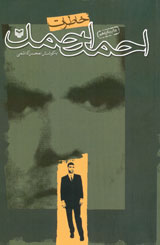
Ahmad Ahmad Memoirs (41)
Edited by Mohsen Kazemi
Soureh Mehr Publishing Company
(Original Text in Persian, 2000)
Translated by Mohammad Karimi
Qezel Hessar Prison (1) and Freedom Again
Mehdi Rezaee was executed on September 7th 1972. We decided to hold a meeting in memory of him in the big room known as “Gathering Room” (2). In this meeting Ayatollah Anvari stood at the door to welcome others as the host.
Group of Marxists reported the news of this meeting to SAVAK. After many interrogations SAVAK arrested 5 people who had the main role for holding this meeting (Ahmad Shah Bodaghlou, Hussein Husseini-Zadeh, Abulqasem Sarhaddi-Zadeh, Seyyed Mohammad Kazem Mousavi Bojnourdi and I) and put them all in solitary confinement for five days and nights. Then they formed a council and then decided to send each of us to exile. Since there was only 9 months remained of my imprisonment verdict, they sent me to Qezel Hessar Prison in order not to be far for later decisions. (Documents 14 and 15)
In Qezel Hessar Prison they took me to political prisoners’ row. When I entered the row, I suddenly saw Nasser Naraghi right in front of me. He was shocked and said: “Oh God! Mr. Ahmad! ...” and began kissing and greeting. |


|
|