| |

|
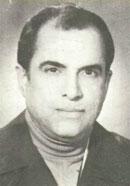
Abdolhadi Haeri: A Man who Kept Hope Alive

When Dr. Abdolhadi Haeri found out that his leukemia did not give him more time to add more knowledge to Iran, began to write his biography upon the recommendation of some of his students, and like Kopernik, held in his hand its printed copy in the last days of his physical life in the hospital. Now, twenty years have passed from that day.
Earlier, I have written at length that the scientists are like icebergs whose published works are their only external and visible part. And unfortunately, this part is only used in evaluating the scientific record of the scientists. The main part of the history of science is never written.

| |

|
|
Iran’s Culture Minster to pen memories
The Minister of Culture and Islamic Guidance, Mohammad Husseini, has said he will write down his memories and compile some of his speeches in a book.
IBNA: Speaking on the sidelines of a ceremony held at Bagh Ziba Garden in Tehran to celebrate the day of Pen on Saturday, July 6, 2013, Husseini said he has plans to write his memories and speeches at almost all of the congresses, cultural events and festivals he attended during his term in office as Iran’s Minister of Culture and Islamic Guidance.
| |
|
|
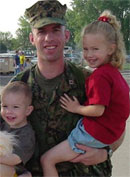
Wisconsin Veterans Museum telling history of wars, one story at a time
Madison — Adam Holton's memories of Iraq are still fresh, even though it's been nine years since he served as commander of a Marine Reserves company.
He vividly remembers the days during Golf Company's 2004-'05 Iraq deployment when five of his Marines were mortally wounded, and he recalls the tedium and excitement of living in a war zone. Holton wanted his memories, and those of his men, preserved for posterity.
Because as long as he remembers his five fallen comrades, others will, too.
"Keeping their memories alive is really important to us," Holton said.
| |
|
|
Oral Literature in the Digital Age: Archiving Orality and Connecting with Communities
Thanks to ever-greater digital connectivity, interest in oral traditions has grown beyond that of researcher and research subject to include a widening pool of global users. When new publics consume, manipulate and connect with field recordings and digital cultural archives, their involvement raises important practical and ethical questions. This volume explores the political repercussions of studying marginalised languages; the role of online tools in ensuring responsible access to sensitive cultural materials; and ways of ensuring that when digital documents are created, they are not fossilized as a consequence of being archived.
| |
|
|
Oral history archive launched online
In order to perpetuate the memory of World War Two, in 2012 the French national railway company (SNCF) asked its former employees and their families to share their recollections of the period. Known for its xperience in collecting life histories, the French Railway Historical Society (AHICF) was commissioned by the SNCF to carry out an oral history project, taking as its starting point an appeal for witnesses published across France between January and December 2012.
This appeal has been a real success. 700 people responded and by its deadline, on the 31st of December 2012, we had planned more than 200 interviews.
| |
|
|
1987: Ovid and Emma Look Back
We conducted this interview in July, 1987 at the home of Ovid and Emma Samples on Massachusetts Avenue back when local oral history had gotten underway in The Big Lemon thanks to people like Dolly Nottingham, the first president of the Lemon Grove Historical Society.
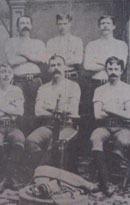
Ovid and Emma Samples produced the accompanying photograph of the Tombstone, Ariz., Fire Department circa 1890. Ovid's father, Calvin, is in the front row, second from the right. Then all of 21, Calvin was a firefighter, unmarried and Ovid a figment in nobody's imagination.
"He married my mother in '96 and I came along in '98," said Ovid from the depths of a rocking chair on the porch of their small home on Massachusetts Avenue.
| |
|
|
Oral History Weekly Magazine Aims and Regulations
Oral History Weekly Magazine wishes to create a suitable place for thoughts and idea development; Its main field would be “Oral History” and subjects as telling & writing memoirs, writing diaries, travelogues, chronologies, and all other subfields of history which are presented in the form of news, articles, reports, notes, interviews and memoirs can be included. There is no limitation on the length of would-be-sent materials.
Mentioning the name, academic background and email is necessary. Articles with complete references and bibliography are more credited and an abstract would quite helpful.
Weekly is not about to publish any material consisting insults and libels about other people or anything that brings anxiety to public opinion. Weekly can edit and translate the received materials.
The published articles and materials are only the writer’s ideas and Oral History Weekly Magazine has no responsibility about their content.
|
|
|

The summer 1392 issue of the e-magazine of "Voice, Oral History News Show" has been published by the National Library and Archives of Islamic Republic of Iran.

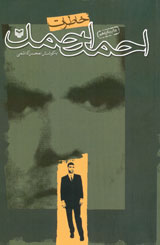
Ahmad Ahmad Memoirs (40)
Edited by Mohsen Kazemi
Soureh Mehr Publishing Company
(Original Text in Persian, 2000)
Translated by Mohammad Karimi
Back to Qezel Qal’eh
After the appeal court they took me to Qezel Qal’eh Prison. There, a Marxist came to me and said: “There is a prisoner in the 1st row who introduces himself as Javad Mansouri and knows you.” I was shocked by hearing it. After some hesitation I told him that I do not know him. I could not believe that Javad was there. It made me deeply thoughtful and worried. I was worried if Hezbollah had been blabbed and tolerating all those tortures and slashes were useless. But there was nothing to be worried about. Despite imprisonment of Javad, Saeed and me, heroic resistance of Javad and lack of information of Saeed Hezbollah had saved Hezbollah from the danger of SAVAK and being blabbed.
Javad sent another message to see me. I pretended that I did not know him, but in a suitable time I went to his cell and called him through the door’s hatch. I said: “Javad!” and he said: “Ahmad, is that you?!” I said yes and asked: “Are you alone there? Is it safe?” He answered: “Yes! It’s only me.” I asked him about the time of his arrest. He said that he had been arrested in June (1972) and known that I was in Qezel Qal’eh by hearing mu name through the loud speaker of prison. I told him that I had passed the first and appeals courts and sentenced to two years in prison. I noted him that his presence may change my conditions and make it worse. Javad said: “So, remember that I had no relation or contact with you.” I said: “So, do I. I have not said anything about you or even a word about Hezbollah.”
Visiting Javad Mansouri, my dear old believing, hard minded and resisting friend was prize for me. I told him: “Javad! Comparing to the previous prisons, this time is much harder because of the amount of tortures and beating. |


|
|