| |
|
Hassan Rohani’s Memoir reprinted

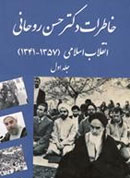
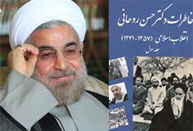
The first volume of Hassan Rohani’s Memoir: Islamic Revolution (1962-1979) has been reprinted by the Islamic Revolution Document Center in Iran.
IBNA: According to the public relations office of the Islamic Revolution Document Center, the book is reprinted as a move to introduce the works and background of president-elect Hassan Rohani to the public.
“Despite the growth and expansion of written culture and technological advances accessible to religious missionaries, oral culture of preaching and directly talking to public audiences are still valuable tools for religious preachers to communicate with the public to transfer their religious messages,” reads a part of the book.

| |

|
|
Farmanfarmaian: oral history of Iran’s contemporary architecture
Abdol Aziz Farmanfarmaian, Iranian architect, offspring of Persian nobleman Abdol Hossein Mirza Farmanfarma and a member of the Qajar dynasty of Iran, passed away in Spain on June 21.
IBNA: Abdol Aziz Farmanfarmaian passed away on Friday, June 21, in Palma, Spain. He was 93. The noted architecture was laid to rest today in Montparnasse Cemetery, Paris.
He can be called the oral history of Iran’s contemporary architecture, chairman of the Iranian Society of Architecture Luminaries Alireza Qhahari said.
| |
|
|
Complete biography of martyr Chamran to be released
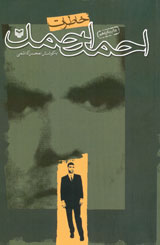
The complete biography of martyr Mostafa Chamran, penned by his brother Mahdi Chamran, will be published by Martyr Chamran Foundation. He was martyred due to an explosion of Iraqi mortar in the battle field on June 21, 1981.
IBNA: Written by his brother Mahdi Chamran, the complete biography of martyr Mostafa Chamran will be released by Martyr Chamran Foundation, the center’s executive manager Kazem Zebarjeddi said.
| |
|
|
Archives adds oral history to digital collection
Interested in learning about Nazi activity in Buffalo during World War II?
How about early 20th century arthritis research? Or maybe the education philosophy of the man who oversaw the Buffalo Public Schools from 1957-75?
If so, you’ll want to check out “University Archives Oral History Collection, 1968-93,”* the latest addition to UB Libraries’ Digital Collections.
The collection contains more than 40 interviews with members of the UB community, including administrators, alumni, faculty, staff and UB Council members.
| |
|
|
East Berliners share local Cold War history
The town will be included in an upcoming exhibit 'Berlins - Made in the U.S.A'
The name East Berlin is what caught the museum director's attention, but the lore he found there is what held it.
When locals heard Rudy Lentz, the executive director of the German American Heritage Museum in Washington D.C., was hoping to collect some oral history at East Berlin's Red Men's Hall on Wednesday, a small group gathered and happily obliged.
They offered personal stories to Lentz's collection, regaling him with memories of presidential adviser and diplomat George F. Kennan, East Berlin's most famous resident.
| |
|
|
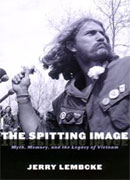
Why Students Should Stop Interviewing Vietnam Veterans
It’s that time of the year: Hi, my name is Emily and I’m supposed to interview a Vietnam veteran for my AP history class. Hello, I’m Chris and my senior project is on the Vietnam War. Do you know any veterans I could talk to? Dear Veterans, I’m studying the Vietnam War and I would like to know how you were treated when you came home. Could I ask you some questions? Thank you for your service, Jason.
Sometimes the inquiries arrive through the listservs of veterans’ organizations; others find their way to me more directly.
| |
|
|
Oral History Weekly Magazine Aims and Regulations
Oral History Weekly Magazine wishes to create a suitable place for thoughts and idea development; Its main field would be “Oral History” and subjects as telling & writing memoirs, writing diaries, travelogues, chronologies, and all other subfields of history which are presented in the form of news, articles, reports, notes, interviews and memoirs can be included. There is no limitation on the length of would-be-sent materials.
Mentioning the name, academic background and email is necessary. Articles with complete references and bibliography are more credited and an abstract would quite helpful.
Weekly is not about to publish any material consisting insults and libels about other people or anything that brings anxiety to public opinion. Weekly can edit and translate the received materials.
The published articles and materials are only the writer’s ideas and Oral History Weekly Magazine has no responsibility about their content.
|
|
|

The Islamic Revolution Document Center reprints ‘Memories of Dr Hassan Rohani: Islamic Revolution (1961-1979)’. The second volume of Hassan Rohani's memoir entails his recollections of the Sacred Defense era and is yet to be released.

Ahmad Ahmad Memoirs (36)
Edited by Mohsen Kazemi
Soureh Mehr Publishing Company
(Original Text in Persian, 2000)
Translated by Mohammad Karimi
Rigidity and Resistance
It was Ramadan; the month of God, month of purity and mercy. It was for the several times that I was in the regime’s prison during Ramadan. Fasting, and praying in those solitary confinements had another atmosphere. I was happy of reaching to healing Ramadan after all those hard tortures and hardships and I could heal my heart wounds and pains. It cannot the expressed how much I enjoyed those Ramadan dawns and sunsets in that loneliness of my cell. The loneliness which was always something bothering to me, I was enjoying a lot then; because I was worshiping my God in this loneliness frankly and clearly.
In this month I found out that Mr. Hashemi Rafsanjani was being imprisoned in the cell No. 17 just right in front of mine. I knew him before because of brother’s activity in Islamic Coalition Councils and knew his ideas. I had participated in some of his speeches’ sessions.
He was an inexhaustible comrade and would not consider the prison wall as impediments for his will. SO, he began a series of speeches and discussions inside that solitary confinement cell. It seems strange, speech in solitary confinement cell (!). But he did it. I tell you how. The door of Cell No. 17 had a window on top with a broken glass. When the two gaurds, I mean Anousheh and Athari, would go for beak fasting at sunset, Mr. Hashemi would begin making his speech through that broken glass window. |


|
|