| |

|
Urban Oral Archives (Interaction of archive with people and people with history)

Archives are considered as the nations' historical memory and are responsible for preserving, keeping and organizing the whole historical documents and resources of a country. They can be divided into national regional, local and private archives in terms of coverage of resources, areas of authorities and explanation of duties. In view of the developments of the recent two decades, the most important goal of archives is to achieve the motto of public access to information resources at anytime, anywhere, with any tool and at any level.

| |

|
|
Official underlines export of Islamic Revolution literature
Caretaker of the oral history section of the Islamic Revolution Literature Bureau underlined the need for translation of books on the Islamic Revolution into other languages in a bid to export the literature.
IBNA: Hujatoleslam Saeid Fakhrzadeh stated that many people in the world are interested in the Islamic Revolution literature of Iran and their desire should be satiated by translation of such works into different languages.
| |
|
|
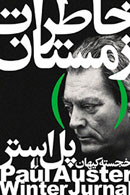
Paul Auster in Iran with his Winter Journal
Translated into Persian by Khojasteh Keyhan, Paul Auster’s memoir entitled Winter Journal has been released in Iran.
IBNA: The novels of American author Paul Auster have hit Iranian bookshelves since some 10 years ago and they were indeed welcomed warmly.
The English version of the Winter Journal was released in August 21, 2012.
“Facing his sixty-forth winter, internationally acclaimed novelist Paul Auster decides to write a journal as he sees himself aging in ways he never imagined,” the Amazon website wrote about the book.
| |
|
|
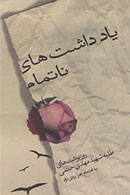
Unfinished Notes published on Sacred Defense operations
The Unfinished Notes is a new title published by Khorshid Baran Publications in Iran encompassing martyr Mehdi Khatami’s memories of five Sacred Defense operations.
IBNA: Compiled by Zahra Yazdinejad, the book focuses on operations Badr, Valfajr 1, Valfajr 8 and Karbala 1.
Martyr Mehdi Khatami was born in Tehran on July 23, 1964. A while after his birth, his family moved to a village named Pil-nour and then to Shiraz and Marvdasht.
| |
|
|
Memory Studies
Memory Studies is a quarterly peer-reviewed academic journal that covers the study of "the social, cultural, political and technical shifts affecting how, what and why individuals, groups and societies remember and forget". The journal's editors-in-chief are Andrew Hoskins (University of Glasgow), Amanda Barnier (Macquarie University), Wulf Kansteiner (State University of New York), and John Sutton (Macquarie University). It was established in 2008 and is currently published by SAGE Publications.
| |
|
|
Intersections of sister fields
In March 2012, there was a discussion on the public folklorists’ listserv Publore about the evolution of oral history as a defined discipline and folklorists’ contribution to its development. As an observer and participant in both fields, I see overlap today. The leaderships of both national associations — the Oral History Association (OHA) and the American Folklore Society (AFS) — frequently collaborate on large-scale projects, like the current IMLS-funded project looking at oral history in the digital age. Their annual meetings regularly take place back-to-back.
| |
|
|
Holy Trinity Episcopal Church and SPOHP Premiere Church History Documentary
The Samuel Proctor Oral History Program at the University of Florida announces the release of a new documentary, "The Fire Within: The Rebuilding of a Downtown Community," which tells the story of the destruction and rebirth of Trinity Episcopal Church in Gainesville, Florida.
On Thursday, April 25, the Spring 2013 academic intern class of the Samuel Proctor Oral History Program (SPOHP) gathered at Trinity Episcopal Church in Gainesville with members of Trinity's congregation to premiere the new documentary, "The Fire Within: The Rebuilding of a Downtown Community." The film was a culmination of four months of work between SPOHP interns and digital coordinators with the Trinity Episcopal community.
| |
|
|
Oral History Weekly Magazine Aims and Regulations
Oral History Weekly Magazine wishes to create a suitable place for thoughts and idea development; Its main field would be “Oral History” and subjects as telling & writing memoirs, writing diaries, travelogues, chronologies, and all other subfields of history which are presented in the form of news, articles, reports, notes, interviews and memoirs can be included. There is no limitation on the length of would-be-sent materials.
Mentioning the name, academic background and email is necessary. Articles with complete references and bibliography are more credited and an abstract would quite helpful.
Weekly is not about to publish any material consisting insults and libels about other people or anything that brings anxiety to public opinion. Weekly can edit and translate the received materials.
The published articles and materials are only the writer’s ideas and Oral History Weekly Magazine has no responsibility about their content.
|
|
|

The professional library of the Office of Islamic Revolution Literature of the Art Bureau has taken part in the Commemoration of the 50th Anniversary of Imam Khomeini (God's mercy upon his soul) Movement entitled "5015" with more than 200 book titles about the uprising of 15 Khordad 1342 solar hijri (June 5, 1963).

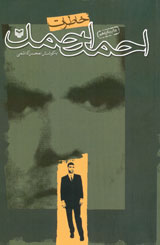
Ahmad Ahmad Memoirs (34)
Edited by Mohsen Kazemi
Soureh Mehr Publishing Company
(Original Text in Persian, 2000)
Translated by Mohammad Karimi
The Sun Still Shines
We passed through the big gate of barracks and entered a big yard. The guard guided me beside a wall and told me: “Stand right here.” Then he called some soldiers and told them: “He should stand there and not move and if he moved, hit him by stock or bayonet. He stands here until I get back.” The soldiers frightened of the sentences by that agent, looked at me worriedly. It seemed they were guarding a dangerous killer.
I could not believe my eyes when I felt the warmness of sunshine on my body. I had been in darkness for a long time and my eyes were not familiar with all that light and they began weeping. With all those injuries on my body and being sleepless for a long time, that fresh air and light were just like a miracle for me. I felt that I was on the clouds flying in the sky. I even heard the sound of springs and birds in my dreams. I was feeling these emotions that I fall asleep. Somebody shook me and made wake up. I took a deep frightened breath. At first I thought the guard who was with me had returned. But he was one of those soldiers and told me: “Sir, lean back on the wall.” I slowly moved back and leant back on the wall. Such a sweet and unforgettable moment it was! I felt that I was in paradise. I was feeling a strange peace. I fall asleep again.
I woke up with the sound of call for prayers at noon. It was a long time that I had not heard the sweet and melodious sound of call for prayers. I told that soldier that I wanted to go to toilet and perform my ablution for prayers. He said no. I insisted and told him: “hey man, aren’t you a Muslim?! I want to say my prayers.” He said: “They’ve told me that you can’t move from here.” Another soldier stepped forward and said: “Let him free. He just wants to say his prayers.” I threatened that if they did not let me go to toilet I would make their dirty because I could not control myself any more. Their commander came and asked what had happened. I explained the matter again. He ordered one those soldiers to take me to the toilet. When I entered the toilet, I fall asleep for about 5 minutes. Suddenly I heard the knock on the door. |


|
|