| |
|
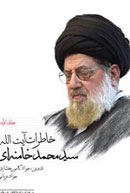
Political memories of Ayatollah Mohammad Khamenei unveiled

Political Memories of Ayatollah Mohammad Khamenei was unveiled during the 17th Conference held to mark Mula Sadra.
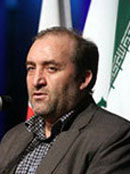
IBNA: On Wednesday, May 22, 2013, a conference was held to praise Mula Sadra in the presence of Ruhollah Husseinian, member of the Islamic Assembly and head of the Islamic Revolution Document Center, at Adineh Cultural Complex.
Addressing the audience at the conference, Hujatoleslam Husseinian delivered a speech about the political memories of Ayatollah Mohammad Khamenei, saying that the Islamic Revolution Document Center has published the work which is based on 120 hours of interviews with Ayatollah Khamenei about his political activities.

| |

|
|
Best Sacred Defense works to be honored
Manager of Sacred Defense Museum Garden announced that the books published on Sacred Defense within the next 4 months will be considered by the garden’s experts and the best ones will be honored.
IBNA: Speaking with IBNA, Commander Jawad Khazraei stated that free membership in the center's library on May 24 and 25 parallel with the anniversary of the liberation of Khoramshahr is one of the programs of the center to mark the event.
He further added that the center endorses all the Sacred Defense publications which will be published within the next 4 months and will honor the best ones. The period is marked to begin with the anniversary of liberation of Khoramshahr and end with the Sacred Defense Week.
| |
|
|
Who Owns Oral History?
Who “owns” oral history? When an oral history narrator shares her story in response to questions posed by an interviewer, and the recording and transcript are deposited in an archive, who holds the rights to these historical source materials? Who decides whether or not they may be shared with the public, quoted in a publication, or uploaded to the web? Who decides whether someone has the right to earn money from including an interview in a commercially distributed book, video, or website? Furthermore, does Creative Commons, a licensing tool developed by the open access movement to protect copyright while increasing public distribution, offer a better solution to these questions than existing oral history protocols?
| |
|
|
Oral histories and archiving memories in South Africa
There is a great need in South Africa – and probably elsewhere – to safeguard intangible heritage by collecting, recording and archiving memories of community members from different parts of the country. Conservation of these memories requires the use of oral history, testimonies and personal recollections of the quotidian. The National Film Video and Sound Archives (a component of the National Archives and Records Service of South Africa), the Centre for Popular Memory, CPM, (at the University of Cape Town), the Wits History Workshop, South ...
| |
|
|
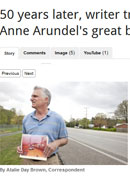
fire in Anne Arundel's, 50 years later
Joseph Ross of Linthicum stands on Dorsey Road in Glen Burnie, the point of origin for a series of brush fires that swept across much of northern Anne Arundel County on April 20, 1963. He is writing an oral history to show the impact of that day on county firefighting. Joseph Ross sits at his computer, opens Google Maps and types in “Dorsey Road.” He clicks the search button.
When the map appears, he points to the spot where he stood 50 years ago, as he witnessed one of the biggest fires in Anne Arundel County history.
He moves his finger around the screen, pointing to hot spots where the fires spread, engulfing big stretches of land in Glen Burnie, Severn and other areas.
| |
|
|
Oral History Weekly Magazine Aims and Regulations
Oral History Weekly Magazine wishes to create a suitable place for thoughts and idea development; Its main field would be “Oral History” and subjects as telling & writing memoirs, writing diaries, travelogues, chronologies, and all other subfields of history which are presented in the form of news, articles, reports, notes, interviews and memoirs can be included. There is no limitation on the length of would-be-sent materials.
Mentioning the name, academic background and email is necessary. Articles with complete references and bibliography are more credited and an abstract would quite helpful.
Weekly is not about to publish any material consisting insults and libels about other people or anything that brings anxiety to public opinion. Weekly can edit and translate the received materials.
The published articles and materials are only the writer’s ideas and Oral History Weekly Magazine has no responsibility about their content.
|
|
|

The book “Ayatollah Taleqani and Political Groups” has been published by Islamic Revolution Document Center.

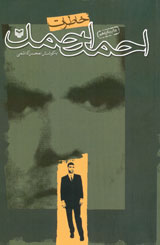
Ahmad Ahmad Memoirs (33)
Edited by Mohsen Kazemi
Soureh Mehr Publishing Company
(Original Text in Persian, 2000)
Translated by Mohammad Karimi
Dreadful Tortures in Qezel Qa’eh Prison
When we reached Qezel Qa’eh Prison (1), they guided us to a corridor where Saqi’s room was on its left side. There I could drop the keys on my feet and slowly on the ground and they were lost in the darkness over there. It was relief for me.
After some moments they moved me to “Surgery Room [otagh-e amal]” (2). This room was located in the east to west side of there. They shoved me behind the table in middle of the room. One of the agents put his hand on the chair. I did not notice what he wanted to do. Suddenly he pulled the chair. I fell down on the ground by my back so hard before being able to do anything. I could only save my head by putting my hands on it. Right then, the four people in the room began hitting me by kicking and punching savagely. There was no limit for their hits. They persistently continued hit me until I fainted or I got asleep. I do not remember because I could not feel their hits anymore; I just could feel the heaviness of the hits on my head. When I opened my eyes, two people came and helped me to sit on the chair again. I was badly battered and pain had penetrated to all my body. |


|
|