| |
|
XVIIIth International Oral History Association, Barcelona, Spain

The International Oral History Association will hold its next meeting in Spain at the University of Barcelona, July 9-12, 2014 (master classes will be held on July 8). Its theme will be Power and Democracy. The force of democracy as well as the resistance it has met have prompted oral history projects around the world. Interviews with advocates of change have supplemented and supplanted archives of discredited regimes. Oral histories have documented social and political upheavals, reform movements and reactions.

| |

|
|
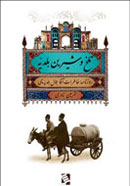
Agha Jamal Baladiechi’s Memoirs of Norouz released
“Baladieh Bitter and Sweet” penned by Shermin Naderi contains the memoirs of Agha Jamal Baladiechi who relates the memories of Tehran and its municipality during Naseri to Pahlavi historical periods together with photos and humor. A large part of the book focuses on his memories of Norouz.
| |
|
|
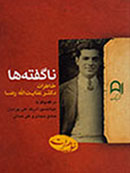
Memories of Dr Reza released
The Unstated is a book entailing memories of Dr Enayat Reza in interviews by Abdolhussein Azarang, Ali Bahramian, Sadegh Sadjadi and Ali Hamedani. The book covers Dr Reza's memories of his activities in the Mass Party and the Democrat Sect.
IBNA: Speaking with IBNA, Ali Hamedani, one of the interviewers, stated that the memories are a monumental contribution to the history of the Mass Party in Iran prior to the victory of the Islamic Revolution.
| |
|
|
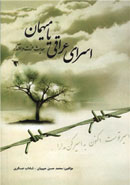
Accounts on 24 years of hosting Iraqi captives released
Iraqi Captives or Guests is the title of a report on 24 years of hosting Iraqi POWs by the army of the Islamic Republic of Iran.
IBNA: The book is published by the Sacred Defense Values and Works Preservation Organization of Iran’s Army and entails a report on the way Iranians hosted Iraqi captives of the war from 1980 through 2003.
| |
|
|
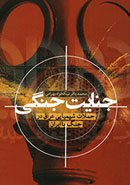
War Crimes to be presented at TIBF
Mohammad Bagher Nik-khah Bahrami, author of War Crimes, has focused on Iraq’s chemical warfare against Iran during its assault on the country.
IBNA: Published by the Sacred Defense Research and Document Center, the book reviews the Sacred Defense events so far as chemical warfare by Iraqi forces and Iran’s defense measures were concerned.
| |
|
|
Back to Business: A Next Step in the Field of Oral History (2)
In order for historians to understand organizational and elite behavior, an archive is of the essence. In an oral world, however, new ways must be found to create archives. Oral history can greatly contribute to finding those new ways. Moreover, oral history can provide sources in a more timely fashion than conventional archives are able to provide them. It can take up to a century before government archives are opened. Consequently, oral history often offers the only sources available. Oral history projects on American presidents, for example, are important historical sources since “the White House operates largely as an oral culture.
| |
|
|
Oral History Weekly Magazine Aims and Regulations
Oral History Weekly Magazine wishes to create a suitable place for thoughts and idea development; Its main field would be “Oral History” and subjects as telling & writing memoirs, writing diaries, travelogues, chronologies, and all other subfields of history which are presented in the form of news, articles, reports, notes, interviews and memoirs can be included. There is no limitation on the length of would-be-sent materials.
Mentioning the name, academic background and email is necessary. Articles with complete references and bibliography are more credited and an abstract would quite helpful.
Weekly is not about to publish any material consisting insults and libels about other people or anything that brings anxiety to public opinion. Weekly can edit and translate the received materials.
The published articles and materials are only the writer’s ideas and Oral History Weekly Magazine has no responsibility about their content.
|
|
|

The Iranian poet Alireza Qazveh says I have written my 5-year memories in India as cultural advisor and plan to publish them.

Ahmad Ahmad Memoirs (28)
Edited by Mohsen Kazemi
Soureh Mehr Publishing Company
(Original Text in Persian, 2000)
Translated by Mohammad Karimi
Reconstruction and Development Corps of Semnan
After finishing the training course and learning some information about hygiene, rural construction, irrigation, agriculture and … I was waiting to be dispatched to a village or county for serving people and be freed of dry army system. But I firmly believed forming this kind of governmental organizations such as Reconstruction and Development Corps, literacy Corps, and ... was only propaganda for dissembling people by the Pahlavi regime. However, I welcomed this opportunity and tried to change the situation in my favor and serve my people as a member of Reconstruction and Development Corps.
Because of my good marks they let me to serve in a county of my own choice. And since I did not want to be far from my other comrades in Hezbollah Group and do my organizational tasks, I chose Semnan province.
It was around April of 1969 that I was dispatched to Semnan. Reconstruction and Development Corps Administration office was in the governorship building. At first I went to visit the then governor general, Mr. Dabiran and introduced myself. He told some general points about Semnan and then sent me to the village of Kheir Abad. This village and another village, Rokn Abad were located about 3 kilometers in south of the city’s railroad. After these two villages was desert. Near these two villages, there was Haji Abad brimstone mine that a group of villagers would work there. |


|
|