| |
|
Longing for the Sun to Shine Once Again…

Speaking and writing about spring is a long tradition. All our predecessors, whose virtue and wisdom is now the cultural reservoir of our country, have penned down magnificent poems and writings about spring. We were also obliged to write about spring from a young age when we were primary school students. I am asked to write about spring now that here I am, overwhelmed by the passing of years into the second half of my prospectively 100-year-old life.

| |

|
|
Doug Boyd and the Power of Digital Oral History in the 21st Century
One of the most influential leaders in this modern oral-history movement is Doug Boyd, director of the Louie B. Nunn Center for Oral History at the University of Kentucky Libraries. Boyd (who blogs at http://digitalomnium.com/) is pioneering the use of digital technology to preserve and distribute oral histories. When I asked him what’s so special about oral histories, he said that a historian uses detective work and guess work to piece together resources and draw conclusions, while a recorded interview is a first-hand account told by a witness to history. It is living source material.
| |
|
|
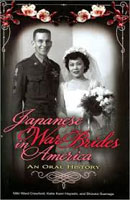
JAPANESE WAR BRIDES IN AMERICA
In the countries featured in Japanese War Brides in America: An Oral History, people conventionally celebrate marriage by donning ritual attire, preparing official documents, and performing religious rites and ceremonies. Despite such treasured traditions, however, the estimated fifty thousand Japanese women who married American GIs after World War II were rarely accorded such pleasures at home or in the U.S. On the contrary, many were met with distrust, hostility, and condescension. Yet, few regret their decisions.
| |
|
|
Oral history project to mark university anniversary
THE story of the history of the University of York has been told as part of a new digital archive celebrating half a century of academic excellence.
As part of the university’s 50th anniversary celebrations, the York oral history project has recorded and transcribed the recollections of a wide variety of people including vice-chancellors, former students, founding fathers, current academic and support staff, as well as people from the wider York community.
| |
|
|
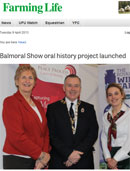
Balmoral Show oral history project launched
AS the Royal Ulster Agricultural Society makes final preparations for the move to a new venue and the launch of the 2013 Balmoral Show at Balmoral Park, Maze, now seems to be an ideal time to consider recording the memories of many of those who have been associated with the show in the years prior to its move.
Queen Mary University of London is leading a major EU-funded Oral – History project on the Peace Process of which core components include the creation of a heritage interview archive, the delivery of oral history training, and supporting the development of local projects.
| |
|
|
Back to Business: A Next Step in the Field of Oral History (1)
Business organizations and elites are often neglected in oral history as a result of the dominant assumption that elites have ample opportunity to be heard. We argue, however, that researching corporations and elites is very interesting for oral historians. This contention is supported by the four contributions that legitimize the use of oral history as formulated by Richard Crownshaw and Selma Leydesdorff. First, oral history research on organizations and elites is important for archival reasons as it helps to record information that would otherwise be lost. Second, we argue that the use of oral history for research on leadership and organizations is scientifically sound.
| |
|
|
Oral History Weekly Magazine Aims and Regulations
Oral History Weekly Magazine wishes to create a suitable place for thoughts and idea development; Its main field would be “Oral History” and subjects as telling & writing memoirs, writing diaries, travelogues, chronologies, and all other subfields of history which are presented in the form of news, articles, reports, notes, interviews and memoirs can be included. There is no limitation on the length of would-be-sent materials.
Mentioning the name, academic background and email is necessary. Articles with complete references and bibliography are more credited and an abstract would quite helpful.
Weekly is not about to publish any material consisting insults and libels about other people or anything that brings anxiety to public opinion. Weekly can edit and translate the received materials.
The published articles and materials are only the writer’s ideas and Oral History Weekly Magazine has no responsibility about their content.
|
|
|

Owned by Hoze Honari (Art Center), the website of the Iranian Oral History has been enlisted by the International Oral History Association (IOHA) alongside 12 other international websites.

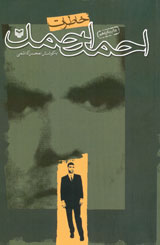
Ahmad Ahmad Memoirs (27)
Edited by Mohsen Kazemi
Soureh Mehr Publishing Company
(Original Text in Persian, 2000)
Translated by Mohammad Karimi
Knowing Mohammad Mofidi
Knowing Mohammad Mofidi (1) was one of the greatest achievements for me during my military service. He was martyred later. The story of knowing him is a nice one. In Karaj Garrison I was in the 6th battalion. Once when they were calling the names of the soldiers, I heard the name of Ladjevardi in the 3rd battalion. I guessed he may be a relative of Assadullah Ladjevardi. I went to see him and asked the matter. He said that he was his relative. We became friends. Gradually I noted that he had a relation with a tall young man. I monitored him and saw that he would Koran so well and without mistake. At that time considering reading Koran was a key element for knowing religious individuals. I became friend with him and gradually I know him better. He knew me only with my military name ‘Soldier Ahmad Ahmad’.
After some time I presented some religious and political subjects with him. Mohammad’s reaction was so mature and deliberate. I found him a completely religiously political person. From that time on, most of the time we were talking about political and religious affairs. Later I found he was a brother of Mustafa Mofidi (2) and Dr Abbas Sheybani (3) war his brother in law and he had good political knowledge.
After three months we knew and could trust each other so well. He informed me about some of his political activities. And I introduced him to Abbas Agha Zamani in order to join him to Hezbullah. |


|
|