| |

|
Happy Nowruz!

When our people use the word “’Eyd (celebration)” alone, they mean “Nowruz”. Undoubtedly Nowruz is the oldest most persistent and beautiful Iranian ceremony which is celebrated now from Tibet to Crimea. Nowruz is the unifying link of a great nation whose multi-thousand years of history has a big share in the world’s heritage of civilization, literature, art and culture. We congratulate this great celebration to all Iranians particularly our readers and wish a happy new Persian year for all of them.

| |

|
|
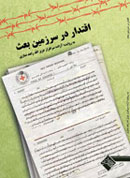
Sovereignty in the Ba’ath Land to be released
Sovereignty in the Ba’ath Land is the title of a new book by Azizollah Zahed Namazi which encompasses 125 topics about Iranian POWs of the Iraq-imposed war on Iran.
IBNA: The book is written by a war prisoner about the conditions of Iranian captives in Ba’ath camps during the Sacred Defense.
The book included 125 topics about the captives who spent years in Iraqi lands and had a lot to tell about their being in the camps.
| |
|
|
Soureh Mehr to release 300 titles in 1392
Soureh Mehr Publications is preparing 300 book titles for the new Iranian year (2013-2014). In 1391, the center released 395 book titles of which Nuruddin; Iran's Son, A Foot which was Left Behind and Shonam were its bestsellers.
IBNA: An official of the center Mehdi Mohammadi said: “In 1391(2012-2013) Soureh Mehr Publications released 90 first prints and 305 reprints.”
| |
|
|
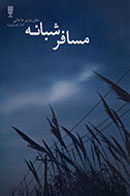
Italian writer’s memories of Bosnian War
Maurizio Maggiani’s novel “The Night Traveler” (Il viaggiatore notturno) is translated into Persian by Athmar Mousavinia. This is the first book by this writer that becomes available in Persian.
IBNA: Mousavinia said, “The Night Traveler won the Strega Prize, best-known Italian literary award. Umberto Ecco is one of the winners of this prize.”
The book is an account of the fictional life of an Italian researcher over a cliff in an Algerian desert waiting for migrating swallows.
| |
|
|
International Conference on the Comparative Social Histories of Labour in the Oil Industry
The International Institute of Social History (IISH) organizes a conference to be held from 13 until 16 June 2013 in Amsterdam on the comparative social histories of labour in the oil industry. The conference is part of the larger project Labour in the Iranian Oil Industry* at the IISH, which is supported by the Netherlands Organization of Scientific Research (NWO).
This conference aims to pull together the work of scholars who situate labour and the social, political, and cultural dimensions of oil at the centre of their analysis.
| |
|
|
OCEANIA: AUSTRALIA, CAMDEN VOICES
Jo Oliver, local studies librarian at Camden council library reports on the Camden Voices Oral History Project which has recorded oral histories of people within the Camden community to be archived and accessible as part of the Camden Council Library collection.
‘Camden Voices is a social history project focusing on individuals who have grown up or worked in the area.
| |
|
|
Oral history spring school
The 2013 Spring School in Oral History will be held at the Institute of Historical Research, in association with the Oral History Society. The programme addresses six major areas: memory; emotion; representativeness and generalisability; analysing data; re-using archived interviews; outputs and impacts. The final day will include a discussion of teaching oral history in Higher Education.
| |
|
|
Warwick Oral History Network conference:
In 2011, protests across the globe placed social movements at the heart of media attention: from the Arab uprisings to the Occupy movements and the Spanish 'indignados', the world seemed caught on a wave of rebellion. Protests against austerity policies and claims for democratic participation have increased since the beginning of the financial crisis in 2008. Accordingly, academic interest in the study of social movements and protests has grown, in particular with regards to the role of social and
mobile media, or the problem of violence and political repression.
| |
|
|
Oral History Weekly Magazine Aims and Regulations
Oral History Weekly Magazine wishes to create a suitable place for thoughts and idea development; Its main field would be “Oral History” and subjects as telling & writing memoirs, writing diaries, travelogues, chronologies, and all other subfields of history which are presented in the form of news, articles, reports, notes, interviews and memoirs can be included. There is no limitation on the length of would-be-sent materials.
Mentioning the name, academic background and email is necessary. Articles with complete references and bibliography are more credited and an abstract would quite helpful.
Weekly is not about to publish any material consisting insults and libels about other people or anything that brings anxiety to public opinion. Weekly can edit and translate the received materials.
The published articles and materials are only the writer’s ideas and Oral History Weekly Magazine has no responsibility about their content.
|
|
|

In 2013 winter, Research and cultural institute of Imam Musa Sadr’s Oral history group held the codifying interview workshop in three sessions.

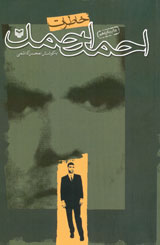
Ahmad Ahmad Memoirs (26)
Edited by Mohsen Kazemi
Soureh Mehr Publishing Company
(Original Text in Persian, 2000)
Translated by Mohammad Karimi
Going to Military Service- Karaj Garrison
My father was under my tutelage and I was exempted from military service for seven years. This time was going to finish. I referred to the Military Service Administration and asked to prolong my exemption from military service. They examined my case and referred it to the court. There, they wrote "soldier" with red pen on my file and said: "Go and serve your country!" I argued: "My father is seven years older, and my exemption of military service should be forever or at least prolonged at the right moment." But they did not accept and said: "We cannot do anything!" Now, what for? I do not know! But I guess they had some orders because of my background of imprisonment verdict and SAVAK involvement in the matter.
Ali Reza Sepassi Ashtiani and Abbass Agha Zamani entered the university and I began my military service on October 6th 1968. On the distribution day, they sent me to the Reconstruction and Development Corps in a garrison in Karaj. From the very early days I promised to myself to continue my political activities cautiously in the garrison. I tried to reserve my reputation and know political people and good believers.
The days would pass with military trainings until in winter day an accident happened.
A general was reviewing the soldiers in a parade and suddenly we heard that somebody squeezed a trigger. Everyone moved and we slightly laughed. We saw that one of our palls lost his color and became so nervous. It turned out his gun was not on safety stop and his finger had touched the trigger unintentionally. The general took a look at everyone and went away. Then an officer came and slapped across the face of that poor soldier severely. I got so upset to see this scene and the shame of that poor soldier. I said: “Why do you hit him?” I could not something more to react. When the review was over I went my unit’s officer and said: “Where you are present, there is no need that another officer to come and slap across the face of a soldier of your unit. You are a Major and he is a captain and this is insulting. If there was anyone to punish your soldier, it should be you.” |


|
|