| |
|
GROUNDSWELL: ORAL HISTORY FOR SOCIAL CHANGE

Sarah K Loose, coordinator of the Rural Organizing Project, Oregon which was highlighted in the previous issue of the journal, reports on an oral history event she organised in New York in September.
‘In our struggles for justice our stories and our histories are sources of power and strength. They inspire and motivate in moments of defeat or uncertainty and build empathy across lines of difference. They show a way forward, highlighting tactics and strategies that result in lasting change. Sharing our stories can empower, awaken, and transform.

| |

|
|
Museum collects storm, civil rights oral histories projects
TUSCALOOSA — Visitors to the Mildred Westervelt Warner Transportation Museum know its space offers sounds in addition to sights. Interactive exhibits offer videos with sound illuminating the museum’s various displays showcasing the area’s history.
Soon more voices will be heard in the former Queen City Bathhouse, now converted to the museum on Jack Warner Parkway, adjacent to the Tuscaloosa Public Library.
Shaina Strom, director of the MWWTM, is leading a team collecting oral histories on two projects.
| |
|
|
Sacred Defense center to cooperate with Culture Ministry
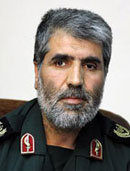
Commander Hadi Moradpiri, head of the Sacred Defense Sciences Research Center, announced that the center will assist the Ministry of Culture and Islamic Guidance to remove deviations from Sacred Defense book.
IBNA: Addressing the opening ceremony of the 4th Resistance Literature Congress at Martyr Bahonar University in Kerman on Wednesday February 27, 2013, Moradpiri asserted that the transfer of Sacred Defense sciences and teachings to future generations is one of the heaviest duties to be fulfilled.
| |
|
|
Biographies of Sacred Defense Cmdr's to be unveiled
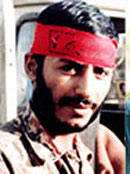
The biographies of 3 prominent martyred Sacred Defense commanders will be unveiled on February 28, 2013 in a ceremony arranged at the building of the Interior Ministry.
IBNA: Speaking with IBNA, the books’ compiler, Gol-Ali Babaei, stated that the books cover the lives of martyrs Hemmat, Cheraghi and Karimi.
As he said, he has also worked on two other biographies on martyred commanders Mahmoud Shahbazi and Hussein Ghejei. The books will be unveiled in a ceremony slated for May 23.
| |
|
|
Veteran writer: Woe betides society if too many translations hit market
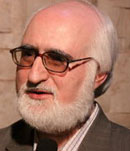
Javad Mohaghegh, children’s senior poet and writer, believes that novels should be a reflection of the society they address rather than disseminating elements of alien cultures.
IBNA: Speaking with IBNA, Mohaghegh stated that recently translated novels have sparked a lot of interest among younger readers in Iran.
“By and large, the greatest books of any culture are translated into other languages, and logically speaking, great books of the world’s literature well outnumber those published in one single country,” he said. “Winners of various international awards are translated into other languages. Naturally, when a work wins several awards it is more probably chosen for translation because they attract more readers.”
| |
|
|
AFFLECK, BEN: PEARL HARBOR
On February 24th the Oscar winners were known. Argo (2012) by Ben Affleck was chosen as the best movie. This movie is about the Hostage Crisis in Iran (1980) in which 6 American diplomats could escape from the US Embassy in Tehran through taking shelter in Ken Taylor’s house, the Canadian Ambassador in Tehran . Many believe this movie is not sincere in narrating the true history including former US president Jimmy Carter, some of these escaping diplomats and many others. The final section of the movie which happens in Mehrabad Airport, or the serious role that CIA agent plays in it, are quite untrue.
Urban Cine File has made an interview with Ben Affleck about Pearl Harbor in 2001 which shows how politics and power can change the ideals of an artist in rebuilding history in a movie.
| |
|
|
Oral History Weekly Magazine Aims and Regulations
Oral History Weekly Magazine wishes to create a suitable place for thoughts and idea development; Its main field would be “Oral History” and subjects as telling & writing memoirs, writing diaries, travelogues, chronologies, and all other subfields of history which are presented in the form of news, articles, reports, notes, interviews and memoirs can be included. There is no limitation on the length of would-be-sent materials.
Mentioning the name, academic background and email is necessary. Articles with complete references and bibliography are more credited and an abstract would quite helpful.
Weekly is not about to publish any material consisting insults and libels about other people or anything that brings anxiety to public opinion. Weekly can edit and translate the received materials.
The published articles and materials are only the writer’s ideas and Oral History Weekly Magazine has no responsibility about their content.
|
|
|

To celebrate the eminence of eight-year Sacred Defense martyrs, especially religious minorities, the Statue of martyr "Babken Khachaturiyan" was installed in front of the Karapet Church in Abadan.

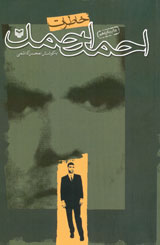
Ahmad Ahmad Memoirs (24)
Edited by Mohsen Kazemi
Soureh Mehr Publishing Company
(Original Text in Persian, 2000)
Translated by Mohammad Karimi
Rain in Dessert
Hezbollah
On 6th of Ramadan 1387 SH (Dec 8th 1967), Abbas Agha Zamani (1) a friend of mine in INP came to my home and after the greetings asked me to go with him somewhere in Tehran suburbs to tell some important to me. When I came out of the house I could see that Ali Reza Sepasi Ashtiani was also in the car. Abbas had a Benz-170. I did greetings with him too and we went. Where? They did not tell me at first.
On the way Abbas Agha Zamani talked about what we were and what had to do. He said: “Ahmad! We did not go to prison to get familiar with some friends or fast or worship and then return back to normal life and consider the story of fight a finished one. No. We have a more important task and that is to continue our fight which we believe in. As long as repression exists we should also continue our fight against it…”
Then we entered the Khavaran Road in eastern Tehran. There were many brick kilns in that district. Before going out of the Islamic area limitations for keeping our fast, we went to a close brisk kiln a bit far from the main road. There was a ruined building which was called Haroun (Aaron) Prison (2). We stopped there and went near to a tree beside the small river and sat. After a long syllogistic speech said the palls inside prison had sent messages to say that our job is not over yet despite coming out of prison. You are the ones who continue the path of people who are still in prison and under torture. Renew your activities to accompany the ones who are in prison. |


|
|