| |
|
Standardized oral history interviews to be released as books

Standardized oral history interviews, conducted by the National Library of Iran and Defensive Science Research Center (DSRC), will be published as two books.
IBNA: Ishagh Salahi said that registering the oral history is the most significant plan of the National Library and Archives of Iran (NLAI) underway in the field of Sacred Defense.

| |

|
|
Collection to introduce martyred women
Armaan Boratha Cultural Institute is seriously pursuing the release of 50 book titles on martyred Iranian women.
IBNA: Speaking with IBNA, one of the institute’s founders Fereshteh Valaviyoun stated that the institute was established in 2008 by a number of revolutionary ladies in Iran in a bid to identify martyred ladies all around the country.
As she said, to fulfill their mission, the group needed to look for martyred ladies in various centers like the Foundation of Veterans and Martyrs’ Affairs, the Behesht Zahra Organization and other related organizations of the country, and is still searching for the exact number of missed women in the Islamic Revolution and Sacred Defense war.
| |
|
|
4th National Congress of Resistance Literature due
Iran will be hosting the 4th National Congress of Resistance Literature from February 27-March 1, 2013.
IBNA: The press conference of the 4th National Congress of Resistance Literature was held today with the attendance of a group of officials.
During the session, an official of the Foundation of preserving and publishing Sacred Defense works and relics talked about a book entitled “The letter of resistance” saying: “The work is an outcome of the resistance literature congress. The event established MA of resistance literature in Kerman, Isfahan, Semnan, Chaharmahal and Bakhtiari, Tehran and Lorestan.”
| |
|
|
New book amasses Imam Khomeini's political biographeis
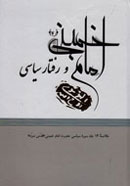
Imam Khomeini and Political Behavior is the title of a book recently published by the Ghadr Velayat Cultural-Arts Institute in Iran encompassing the summary of 14 biographies of Imam Khomeini.
IBNA: A part of the book’s introduction reads as follows: The Supreme Leader of the Islamic Revolution Ayatollah Khamenei has stressed the need for direct, clear and complete presentation of Imam Khomeini’s political stance as a touchstone of the Islamic establishment’s forward movement.
| |
|
|
Iranian, Omani heads of archive centers meet
Imam Khomeini and Political Behavior is the title of a book recently published by the Ghadr Velayat Cultural-Arts Institute in Iran encompassing the summary of 14 biographies of Imam Khomeini.
IBNA: A part of the book’s introduction reads as follows: The Supreme Leader of the Islamic Revolution Ayatollah Khamenei has stressed the need for direct, clear and complete presentation of Imam Khomeini’s political stance as a touchstone of the Islamic establishment’s forward movement.
| |
|
|
NORTH AMERICA; USA: THE RULE OF LAW ORAL HISTORY PROJECT
Gabriel Solis of the Columbia Center or Oral History (CCOH) introduces the Rule of Law Oral History Project.
‘The Rule of Law Oral History Project at CCOH was initiated in 2008 with a focus on documenting legal challenges brought against capital punishment in the United States. In its first year, the project conducted a series of interviews with attorneys working on the frontlines of death penalty jurisprudence.
‘Recognising intersections between litigation challenging the death penalty and the legal architecture surrounding the use of detention facilities at Guantánamo Bay, the Rule of Law Oral History Project expanded in 2010 to study the deterioration of basic constitutional principles during the global “war on terror,” including the degradation of the promise of habeas corpus and the right to due process.
| |
|
|
Oral History Weekly Magazine Aims and Regulations
Oral History Weekly Magazine wishes to create a suitable place for thoughts and idea development; Its main field would be “Oral History” and subjects as telling & writing memoirs, writing diaries, travelogues, chronologies, and all other subfields of history which are presented in the form of news, articles, reports, notes, interviews and memoirs can be included. There is no limitation on the length of would-be-sent materials.
Mentioning the name, academic background and email is necessary. Articles with complete references and bibliography are more credited and an abstract would quite helpful.
Weekly is not about to publish any material consisting insults and libels about other people or anything that brings anxiety to public opinion. Weekly can edit and translate the received materials.
The published articles and materials are only the writer’s ideas and Oral History Weekly Magazine has no responsibility about their content.
|
|
|

The book "Days" by Dr. Mohammad Ali Eslami Nadoushan will be unveiled in the city of Yazd on February 28th, 2013.

Ahmad Ahmad Memoirs (24)
Edited by Mohsen Kazemi
Soureh Mehr Publishing Company
(Original Text in Persian, 2000)
Translated by Mohammad Karimi
Islamic Community and the Marxists Commune in Prison
What we had in Prison No. 3 was a picture of an Islamic Community. Whatever that someone would like for himself would like it for others and what he would not like for himself would not like it for the others as well. Brotherhood and unity were seen in all levels. We had no financial dependency in the prison. If someone had something it belonged to all the brothers. And if somebody needed something the others would give him. It was the utopia we were looking for. Prison was a chance to test Islamic ideas practically. Islamic Community was an ideal goal and prison was a chance to experience it.
55 INP members joined the Islamic Councils Coalition pioneers and created Islamic Community versus the Marxist Commune. The Islamic Community had an executive board who were elected each two months. This board had 5 members and each of them was in charge of an affair, such as financial affairs of the members, food supply, cleaning, news collection, how to react with the prison officials and other groups and…
In Islamic Community, the money earned and the expenses were common. All the money given to the prisoners by the prison (36 Tomans) or by the visitors would be collected in a briefcase. The names of the members were written on the briefcase. At the beginning of each month members would go and put their money in it and their name would be marked with an (x). Whatever the prisoners needed would be bought by this money. During the term that Mr. Araqi and I had been elected, the board had 1800 Tomans debt. We could manage to pay this debt in 4 months and then increase the food quality. |


|
|