| |
|
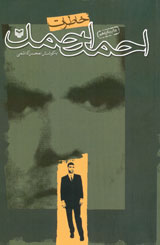
Soroush releases The Days

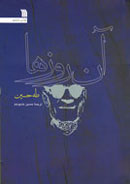
Soroush Publishing Company has published the Days, prominent Egyptian writer Taha Hussein’s autobiography, in Persian in Iran.
IBNA: The book is rendered into Persian by the late Hussein Khadiv Jam. It encompasses Hussein’s life events since his childhood.
Considered by many as one of the greatest historical documents on contemporary history, the original version of the book is published in three volumes with Hussein as its main character.
The book begins with Hussein’s childhood and his blindness and the difficulties that it brought him in the society.

| |

|
|
2nd Int'l Book of Resistance Festival calls for submissions
The call for the 2nd International Book of Resistance Festival (Shahid Avini Literary Prize) is released. The festival is going to assess all submitted publications in 2011 and 2012 and award the superiors.
IBNA: Revayat Fath Publishing Institute will hold the second International Book of Resistance Festival to award Shahid Avini Literary Prize to the best literary work of the past two years.
Promotion of culture, language and literature of resistance, propagation of religious, national and revolutionary values, commemoration of eminent writers and researchers in this field, encouragement of upcoming young researchers, and elevation of international procedures involving Islamic Resistance at both qualitative and quantitative levels are the main goals of this festival.
| |
|
|
Iran to launch virtual digital library network
Secretary general of the Foundation of Public Libraries announced that the first compressive digital library network in Iran will be run by the end of the current year.
IBNA: Speaking with IBNA, Mansour Vaezi stated that Persian ebooks will be made available in the network of digital libraries of the foundation.
He expressed hope that the network will be operational by the end of the current year in Persian calendar.
He went on to say that the network will be equipped with audio books for the visually handicapped.
| |
|
|
'Invisible' Filipino history in Annapolis documented by UMD researchers
Filipinos have been an invisible minority in Annapolis, Maryland for more than a century. Now, researchers at the University of Maryland are using oral histories as a way to flesh out their life and times – documenting the incredible challenges they faced – and successes they celebrated.
After the Spanish-American War, the Philippines became a U.S. territory. Filipinos were brought to Annapolis – home of the Naval Academy – to serve as desk interns, fire fighters, construction laborers, messmen and stewards. In many cases, the Naval Academy replaced African Americans with Filipinos leading to increased racial tensions.
| |
|
|
Photo exhibit in Whiteville celebrates lives of rural African-Americans
What began as an oral history project by the Lower Bladen/Columbus Historical Society has become an exhibition celebrating African-American life in rural Columbus and Bladen counties.
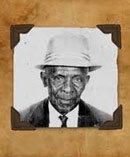
The North Carolina Museum of Forestry is hosting the photography exhibit, "Flashback: Community Life Through the Lens of Mack Munn, 1940-1960."
An agent for the Shaw Mutual Burial Association, Munn was better known for taking a camera everywhere he went.
"He didn't want to miss a picture," said Harry Warren, director of the museum. "He would show up for everything - birthdays, any celebrations - and he always told folks they didn't have to buy anything. And, of course, they always wanted to buy his pictures."
| |
|
|
ORAL HISTORY in GREECE
Riki Van Boeschoten, Associate Professor of Oral History and Social Anthropology at the University of Thessaly, Greece reports on three current oral history projects in Greece that she is supervising. ‘The Hania Oral History Centre was set up in 2009 in the town of Hania, Crete, with the cooperation of the local government, the University of Salonica and an enthusiastic team of twenty volunteers.
‘The ultimate aim of the project is to create a museum of oral history which will also function as a research centre and oral history archive. The first set of oral histories was presented in December 2010 to the town’s citizens where people could watch and listen to all the interviews.
| |
|
|
Oral History Weekly Magazine Aims and Regulations
Oral History Weekly Magazine wishes to create a suitable place for thoughts and idea development; Its main field would be “Oral History” and subjects as telling & writing memoirs, writing diaries, travelogues, chronologies, and all other subfields of history which are presented in the form of news, articles, reports, notes, interviews and memoirs can be included. There is no limitation on the length of would-be-sent materials.
Mentioning the name, academic background and email is necessary. Articles with complete references and bibliography are more credited and an abstract would quite helpful.
Weekly is not about to publish any material consisting insults and libels about other people or anything that brings anxiety to public opinion. Weekly can edit and translate the received materials.
The published articles and materials are only the writer’s ideas and Oral History Weekly Magazine has no responsibility about their content.
|
|
|

A collection of memories of fourteen martyrs in Northern Khorasan Province under the heading “Ayas and Mirrors” has been unveiled.

Ahmad Ahmad Memoirs (22)
Edited by Mohsen Kazemi
Soureh Mehr Publishing Company
(Original Text in Persian, 2000)
Translated by Mohammad Karimi
Prison No. 3
After about 4 months, they sent me to Prison No. 3 where the other INP members were held as political prisoners. There, we had fewer problems because of being beside other friends who were all political. Something that I should narrate here are the stories of honoring resistance of our palls.
Days and nights at prison were the same. In order to flee from this condition we had scheduled our time. I dare to say that we had no misused time. From dawn to sunset we had filled our time by worship, prayers, classes, discussions, news analysis, cleaning and … Mr. Anvari had two kinds of classes; a public one and a professional one. And Mr. Hojjati Kermani had Koran interpretation classes.
Our public prayers ceremonies held in Ayatollah Anvari Mr. Hojjati Kermani rooms were among the most the beautiful scenes on those days. The other religious and national ceremonies and worshiping circles were held in their own place. Dua Kumayl and Tawassul (literally the Supplication of Kumayl and resort) ceremonies were held every week by the eulogy of Mr. Akbar Salahmand and Mohammad Baqer Senoubari and Mohsen Haji Mehdi and also Mr. Hojjati Kermani speeches.
In Nowruz celebrations, they had appointed particular days for the visit of prisoners and their families. They let them to bring under 12 years old kids with themselves. Though, I was not married then and had no kids, but I could see my nieces and nephews. We could not wait for this day. A week earlier we would clean all the building and decorate it with color papers and balloons to welcome Nowruz. We even would prepare good food for the guests. That one week was full of liveliness happiness and enthusiasm. That day, the unforgettable day for all prisoners, Dr. Reza Mansouri (1) who was 16 at that time, could manage to show himself as a twelve-years-old boy because of his small and slim body and visit his brothers (Javad and Ahmad). |


|
|