| |
|
Islamic Revolution Document Center to hold 13 book fairs

The Islamic Revolution Document Center will hold 13 book fairs during the Fajr Decade in schools of Tehran, Iran.
IBNA: The center will also unveil audio memories of Hujatoleslam Nategh Nouri on January 31, beginning of the decade.
The center has planned for various book-related programs to mark the decade. The Fajr Decade is celebrated in Iran every year as the anniversary of the victory of the Islamic Revolution.
On every day of the decade, the center releases a book title on its website. The presented titles are themed at the revolution, memories of prominent revolutionary figures, regional history of the Islamic Revolution and informative items addressing youngsters about the revolution.

| |

|
|
Americans warmly welcome Sacred Defense books
The universities of the United States warmly welcome Sacred Defense books, an official of Tehran Art Bureau announced.
IBNA: The head of the translation office of the Art Bureau Fahimeh Mohammad Semsar said: “Some of the books which have been translated into English by the center include Journey to Heading 270 Degrees, Chess with the Doomsday Machine, Fortune Told in Blood, Sabalan Stories, Ismail and A City under Siege. Moreover the translation of Red Olive, the memories of Nahid Yousefian written by Qasem Yahoseyni, will be released as well. The work is rendered into Persian by M.R Ghanoonparvar.”
| |
|
|
Obama’s First Term: A Romantic Oral History
Four years ago, on the eve of Barack Obama’s inauguration, this magazine devoted nearly an entire issue to a photo essay, “Obama’s People.” The photographs, 52 of them, depicted a team arriving on a wave of hope despite inheriting an economy in trouble, a collapsing auto industry, two wars and a continuing terrorist threat.
Four years later, they have met some of those challenges, been daunted by others and created new ones of their own. The economy is better but still anemic. Osama bin Laden is dead and the Iraq war over, but Afghanistan remains a morass and the prison at Guantánamo Bay remains open. The auto industry has been saved and health care expanded, but national debt has soared. A dictator in Libya has been toppled, but a dictator in Syria slaughters his own people undeterred.
| |
|
|
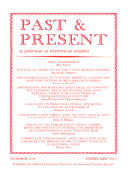
Past & Present Latest Issue Published
No 218; the latest issue of Past & Present for February 2013 has been published.
Founded in 1952, Past & Present is widely acknowledged to be the liveliest and most stimulating historical journal in the English-speaking world. Past & Present is a British historical academic journal, which was a leading force in the development of social history. It was founded in 1952 by a combination of Marxist and non-Marxist historians. The Marxist historians included members of the Communist Party Historians Group, including E. P. Thompson, Christopher Hill, Eric Hobsbawm, Rodney Hilton, and Dona Torr.
It is published four times a year by Oxford University Press on behalf of The Past and Present Society, a British historical membership association and registered charity.
The society also publishes a book series (Past and Present Publications), and sponsors occasional conferences and appoints postdoctoral fellows.
| |
|
|
EUROPE-CYPRUS: THE CYPRUS ORAL HISTORY AND LIVING MEMORY PROJECT
The Cyprus Oral History and Living Memory Project is a process of reflecting on the events of the recent history of Cyprus, particularly the important historic period 1960-1974. Cyprus, one of the smallest countries in the European Union, is also the last divided country in Europe, Nicosia its last divided city.
Dr. Nikoletta Christodoulou, project coordinator and principal investigator, introduces the project, as ‘an endeavor to understand the events that contributed to “the Cyprus problem” and to make this information available to others.
‘We interviewed forty people; mostly excluded voices of the widest variety of people who lived through the events of 1974 in a range of capacities, as inhabitants, soldiers, refugees, students, relatives, friends, men and women, girls and boys, Greek-Cypriots, Turkish-Cypriots, and Maronites. Advisor to the project, Professor Bill Ayers argues that a rich and varied archive helps us to understand “how participants, as three-dimensional, grass-roots makers of history, understood the events and narrated their lives”.
| |
|
|
Landmarks Committee preserving township, one memory at a time in Randolph
Township historians are capturing the memories of a bygone era and preserving them for future generations through an oral history program.
Since the oral history program began in 1999, more than 30 lifelong residents who spent 50 or more years living in Randolph Township have told their stories of what life was like for them growing up in what was then a rural farming community whose population swelled with visitors escaping the city heat during the summer months just as it does in seashore communities today.
The Landmarks Committee, comprised of volunteers appointed by the Township Council, is looking for people who spent at least 50 years of their life in Randolph Township, all of whom would remember the open, rolling farmland and wooded areas that existed before the first wave of major developments arrived in the 1970s.
| |
|
|
Oral History Weekly Magazine Aims and Regulations
Oral History Weekly Magazine wishes to create a suitable place for thoughts and idea development; Its main field would be “Oral History” and subjects as telling & writing memoirs, writing diaries, travelogues, chronologies, and all other subfields of history which are presented in the form of news, articles, reports, notes, interviews and memoirs can be included. There is no limitation on the length of would-be-sent materials.
Mentioning the name, academic background and email is necessary. Articles with complete references and bibliography are more credited and an abstract would quite helpful.
Weekly is not about to publish any material consisting insults and libels about other people or anything that brings anxiety to public opinion. Weekly can edit and translate the received materials.
The published articles and materials are only the writer’s ideas and Oral History Weekly Magazine has no responsibility about their content.
|
|
|

The Director of the Center for Documents and National Library of Fars Province and the Director of Iranian History Association, Fars Branch, Mohammad Ali Ranjbar says history workshops with the subjects such as “method of research in history”, “oral history”, “methodology”, "practicology" and so on will be held in the near future in Shiraz.

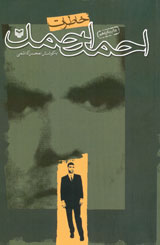
Ahmad Ahmad Memoirs (20)
Edited by Mohsen Kazemi
Soureh Mehr Publishing Company
(Original Text in Persian, 2000)
Translated by Mohammad Karimi
Qasr Prison
When the trail was over they transferred us to Qasr Prison (1) on Thursday. There, they separated 15 of us whose verdicts were death, life or long imprisonment sentences and sent them first to a newly constructed school and then to a big but dirty room where coal was kept. This room was the old visiting room of the 1st row. They wanted to move us to Prison No. 1 during the next days. Since I was familiar with that prison because of my brother’s presence there, I told the pals that Prison No.1 is for ordinary prisoners and the atmosphere there is immoral. Some others approved what I told. So, we decided to confront in case if being sent there. They separated thirteen of us including Mohammad Javad Hojjati Kermani and Javad Mansouri and sent them Prison No. 3. We started to protest from the very first night and asked to be sent there too. But they said there are communist and Marxist prisoners and they may mislead you. Our pals continued their protest without paying attention to what they say. The same night a cleaner came to our room and asked: “Who is Ahmad? Who is Shalchi?” Mohammad Shalchi and I introduced ourselves. He said: “Haj Agha Araqi (2) has sent you this food (Dampokhtak) and said ‘you should never ever accept to come to Public Prison!’” Hearing this, we became sure. We started to recite Du’a Kumayl together when our dinner was finished. Mr. Akbar Salahmand recited the Du’a so languishing and the pals were crying. Suddenly the guard opened the door and burst in and said: “You, who were not brave enough, why have entered this kind of activity?!” Hearing this sentence, some of us began to laugh in the middle of crying. After the Du’a the young ones went asleep. Abbas Agha Zamani (Abu Sharif), Yousef Rashidi and I who were older than others talked with each other and undertook to impede the transference of our young friends to Prison No. 1. Then we told over last words to each other and became ready to confront the matter up to our martyrdom.
The late Mr. Araqi sent another message and insisted: “You should resist and not go to Public Prison. We have informed your families. Right now they are gathered behind prison walls and are asking for your transference to political prison.” |


|
|