| |
|
Memoirs of first decade after revolution to be published

The Islamic Revolution Literature Bureau will publish a series of memoirs about the first ten years after the victory of the Islamic Revolution in Iran.
IBNA: The collection is entitled as “I say it for the sake of History”, and is penned by Saeid Allamian. The works will be published by Soure Mehr Publishing Company.
Hedayatollah Behboudi, manager of the Islamic Revolution Literature Bureau, has said that the collection is being prepared with the aim of filling the gap in the historical documents and collections about the first years of Iran after the victory of the Islamic Revolution.

| |

|
|
Diary of Swedish officer in Iran ready for publication
Iranian translator and writer Afshin Parto has finished translating the diary of a Swedish officer from Iran during World War I.
IBNA: The memoir of Gustaf Nystrom has been translated by Afshin Parto.
The work’s Persian translation has been handed over to Bushehr’s Art Bureau for publication.
Major Nystrom was among the Swedish officers, who came in Iran in 1911 when the Iranian government decided to create a highway gendarmerie with the aid of European instructors.
| |
|
|
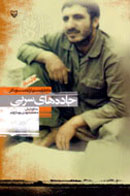
7th reprint of Cmdr Sodagar released
Soureh Mehr has released the 7th reprint of martyr Commander Ahmad Sodagar’s memories. Sodagar died of Iraq-imposed war wounds last year.
IBNA: Entitled as Lead Roads, the book is compiled by Mohammad Mahdi Behdarvand in 19 chapters and entails the martyr’s memories of the Sacred Defense.
Martyr Sodagar was an intelligence officer during the war and was wounded during the 8 years he served in the war. He began recording his memories in 1991 and had it published by Soureh Mehr Publishing company for the first time in 2003. His last post was presiding over the Sacred Defense Research Center.
| |
|
|
AFRICA: KENYA AND TANZANIA DESIGNING TECHNOLOGY FOR THE CITIZEN ARCHIVIST PROJECT
Sean Hewens, describes the technology development underway to support the Citizen’s Archivist Projects that the US non-profit organization Small Bean has established in Kenya and Tanzania.
‘Technology is supposed to make things simpler. But the tools needed to be a Citizen Archivist in a rural location without electricity are expensive and complicated. Not a recipe for sustainability.
| |
|
|
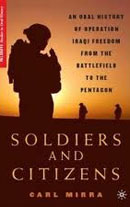
SOLDIERS AND CITIZENS
Part of the Palgrave Studies in Oral History series edited by Linda Shopes and Bruce M. Stave, Soldiers and Citizens presents a collection of oral history interviews primarily with American soldiers, but also with family members, pundits, policy officials, and a few international interviewees. After providing a useful introduction and initial chapter focused on sketching out a brief history of American contacts with Iraq, Mirra groups the oral histories into four thematic chapters.
| |
|
|
The Persistence of Silence after Dictatorships-1
This article describes the Argentina–Catalonia Project, a collaborative secondary school oral history project based in Buenos Aires, Argentina, and Tarragona, Spain. The purpose of the project is to engage high school students in an exploration of the persistence of silence that exists in contemporary Argentina and Spain concerning the impact of dictatorship on everyday life. Toward this end, students both conduct interviews and undertake analysis of them. The persistence of silence is examined from the testimonies of those who lived through the dictatorial regimes, and the process of engaging students in the recovery of the past is explored in depth.
| |
|
|
Oral History Weekly and a look at 100 issues
The poll’s results showed that 51% of the readers evaluate the activity of Oral History Weekly “Good” and 46% of them believe the website and weekly have been able to get close to a professional media. 32% have liked the historical articles and 51% have considered the English page and excellent one and 44% believe the graphic design and colors used for the weekly and website are good.
| |
|
|
Oral History Weekly Magazine Aims and Regulations
Oral History Weekly Magazine wishes to create a suitable place for thoughts and idea development; Its main field would be “Oral History” and subjects as telling & writing memoirs, writing diaries, travelogues, chronologies, and all other subfields of history which are presented in the form of news, articles, reports, notes, interviews and memoirs can be included. There is no limitation on the length of would-be-sent materials.
Mentioning the name, academic background and email is necessary. Articles with complete references and bibliography are more credited and an abstract would quite helpful.
Weekly is not about to publish any material consisting insults and libels about other people or anything that brings anxiety to public opinion. Weekly can edit and translate the received materials.
The published articles and materials are only the writer’s ideas and Oral History Weekly Magazine has no responsibility about their content.
|
|
|

Having announced a call, concurrent with the fortieth day of the passing away of the prominent religious scholar Ayatollah Mojtaba Tehrani, Mesbah al-Hoda Research Cultural Institute intends to publish the memoirs of this great scholar.

Ahmad Ahmad Memoirs (18)
Edited by Mohsen Kazemi
Soureh Mehr Publishing Company
(Original Text in Persian, 2000)
Translated by Mohammad Karimi
Jamshidiyeh Prison
On early days of January, all INP members were transferred to the prison of Jamshidiyeh Garrison. This prison had better equipment such as a big hall, double or triple stairs beds, blankets and heater.
There were two prisons, one for the officers and one for the soldiers. We were prisoned in soldiers’. The central cadres were in a separated cell. That winter is a memorable one for all of us. Because of cold weather the heaters were on. They would burn coal and this matter had its own troubles. I remember that we had to open heater’s door to feed it with coal and whenever we would open it, there was a lot of black smoke coming out. Then we had to open the room’s windows and since the chimney pot was in the yard, the smoke of that would come inside the rooms. It meant to have double size smoke inside. I mean there was a lot of trouble for us to keep ourselves warm.
The Shah’s regime which had not reveal the arrest of INP members, released the news in exaggeratedly and in a vast scale after few days that we had been transferred to Jamshidiyeh Prison in late January. The regime aimed to prepare the public opinion for the news of the trail procedures. They wanted to impede the rise of people’s emotions against the government. They wanted to justify their later oppressive attempts against INP members.
The vast and exaggerated broadcast of INP members’ arrest brought different reactions. Some attached us to Muslim Brotherhood in Egypt and some to USSR and communists. The ones who knew us were aware of our Islamic identity and knew we were inspired by Islam Devotees or a branch of them. The rush of poisonous propaganda against INP made our families worried. Most of them were disappointed to see their children alive anymore. My father narrated for me later: “I saw people had gathered around the newsstands. I went forward and looked at the front pages of some papers. |


|
|