| |
|
Happy New Year, 2013!

Thanks to all our supporters, followers and contributors for sharing news, views and opinions with us in 2012. We begin the New Year with our 100th issue. This success could not be achieved without your help. We look forward to hearing about new developments and challenges and wish you all a wonderfully happy and inspiring 2013!
With best wishes from the Iranian Oral History Website & Weekly Team.

| |

|
|
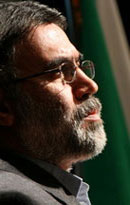
Alireza Kamari, Writer and Researcher
First of all, I congratulate publishing the 100th issue Mr. Karimi, the decent editor of Iranian Oral History Website and all his hardworking colleagues and all the ones who like this weekly and I ask God for greater successes and reaching of this young tree to reach richer fruits and long life. I should also remind the persistence endeavors of Mr. Mohsen Kazemi, the founder of this online journal which deserves long life and development.
In this note, as it has been asked I just present short notes, since if it was possible and advisable, I had to write openly any say whatever I could. And then:
| |
|
|
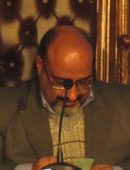
Saeed Alamian, Sacred Defense Writer and Journalist
We shared the publication of 100th issue of Oral History weekly with Alamian. “I do not have time to read all of the articles,” he said, “If a book on oral history is published or I know the Author of the work, I follow them. Indeed, I read selectively. But overall, I have evaluated the Oral History weekly a professional and updated work. It has all aspects of a magazine in electronic format; the layout is also good.”
| |
|
|
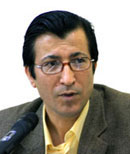
Morteza Dehghan Nejad (PhD), associate professor of history, Isfahan University
To begin with, let me express my most sincere gratitude as a member of the academia toward organizers of this magnificent cause, in view of the fact that oral history gives all Iranians space for expression of their emotions, concerns and memories nowhere else they would be able to do so. The Oral History website and weekly give oral history activists freedom to act and transmit their findings to their interested audience without destroying forests(without using paper). Although oral history practices have been in action since a relatively longer time in the modern world, the movement is still in its incipient stages in Iran. The weekly is one of the forerunners of the cause and is expected to stick to its duty with innovative ideas in the future.
| |
|
|
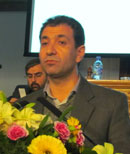
Morteza Rasoulipour, Director of Oral History Department at Iranian Contemporary History Studies Institute
"Undoubtedly, publication of articles about oral history online has its benefits, and the need for such a website on the subject has been felt since a long time ago. I know the website's organizers and I can tell that they intend to inform the society about oral history activities and developments through the weekly. I have a remote idea about the website and its published content, and would like to offer my views briefly and in general terms.
| |
|
|
Abolfat’h Mo’men, Writer and Researcher
Iranian Oral History Weekly, active in fields of Islamic Revolution and Holy Defense oral history and theoretical debates, is in the threshold of its 100th number. I made it an excuse to scrutinize this electronic journal and its operation.
Oral history is a co-walker with Islamic Revolution, has found new dimensions and a new mission through entering Holy Defense arena, so that it has become one of the new resources of research for the investigators and researchers. Knowing and observing the principles and rules of this source, they can use this new origin. But to consider the weekly and its operation I should refer to some points:
| |
|
|
Ali Tatari (PhD), Director of Document Center of Islamic Consultative Assembly
A need is felt for the managers of the site to reconsider their methods of activity at least in every 30 or 50 numbers, how the weekly is sent, its weak points, and …. I mean the site should be checked and problems found out. This can be done through dialogues or periodical meetings. Problems of any field should be found out. Even those centers on the first ratings have a look at their past occasionally and successful workshops have a monthly regular operation check too. I think you are a little late for opinion poll. You may have gone over your operation internally, but it seems late for external one. It should be done actively and seriously. I should once more assert that your presence is much better than your absence.
| |
|
|
Seyyed Abolfazl Razavi (PhD), Associate Professor of Khawrazmi University
Applying the methods the oral historians use in studying history does not have a long record and particularly it seems a more newly-arrived method in our society in a way that they try to take steps toward the historiography of oral history through collecting historical data by focusing on oral history. Such strategy plays a supplementary role in historical studies and even we can make it move toward the direction where it can take the responsibility of studying contemporary history.
| |
|
|
Abolfazl Hassanabadi (PhD), Director of Documentation and Press Affairs of Astan-e Qods Razavi
He said, “If we look from this viewpoint that the weekly in general is the first electronic journal in the area of history with oral history approach which are sent to the interested people largely, and in view of the fact that the collection of subjects in this specialized area is very difficult within one week, we should congratulate those who are in charge of the weekly on their perseverance. Working non-stop and without interval for two years is of great importance.”
| |
|
|
Seyed Vali Hashemi, Head of Literature and Research Department of Art Center in Mazandaran Province
As I've read in books and can recall, scholars of information technology believed 50 year ago that mankind's information and science doubles every 200 years. The theory has not only been on doubling and growth of human science but also Mr. Gustav Le Bon, French philosopher, historian and physician in his book, La Civilisation des Arabes (1884; The Civilisation of the Arabs), he mentions 200 years of time is needed for the transformation of one abnormity into a norm or vice versa.
| |
|
|
Seyedeh Mitra Hashemi, Scientific Editor of Kashan Culture Foundation
After publication and release of 100th issue of this journal a treasure of information is gathered and some measures should be taken for the easy application of the information. Preparing historical archive is a necessary issue for a journal but the retrieval of information is difficult. Preparing thematic archive for the journal is a nice solution for searching previous material and is also the first step in vivid classification of the journal contents that could assist in preparing the contents of future numbers of journal and will also reveal the weak and strong points.
| |
|
|
Three Short Notes from US, Argentina and UK
Unfortunately I am of a generation that has no sense of the esthetics of the Internet and web sites. Therefore any opinion I can give is less than
useless. Usually I get your notices via my regular email and it comes as the usual type and text of email. But in going to your web site I see it is much more of a designed feature. That I can sense but I have no way of seeing beyond that contrast.
| |
|
|
Polls Results
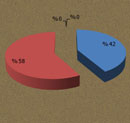
On 17th of October we published the 90th issue of Iranian Oral History Online Weekly and in late December 100th issue was published. These two numbers and the gap between them made us to have a poll about our last two years of activity from the viewpoint of our readers around the world. Surely what we have done had not been a perfect job and there have surely been some faults. So, we asked you to send us your critiques and reviews about our job in these 100 issues and also take part in the poll by answering these four questions below. Now we publish the received critiques here in our weekly. You can see the results under each question:
| |
|
|
Oral History Weekly Magazine Aims and Regulations
Oral History Weekly Magazine wishes to create a suitable place for thoughts and idea development; Its main field would be “Oral History” and subjects as telling & writing memoirs, writing diaries, travelogues, chronologies, and all other subfields of history which are presented in the form of news, articles, reports, notes, interviews and memoirs can be included. There is no limitation on the length of would-be-sent materials.
Mentioning the name, academic background and email is necessary. Articles with complete references and bibliography are more credited and an abstract would quite helpful.
Weekly is not about to publish any material consisting insults and libels about other people or anything that brings anxiety to public opinion. Weekly can edit and translate the received materials.
The published articles and materials are only the writer’s ideas and Oral History Weekly Magazine has no responsibility about their content.
|
|
|

Veteran mine engineer Mehdi Avini in an interview with Donyay-e Eqtesad (World of Economy) daily has talked about oral history, his life and activities. Part of the interview says:

Ahmad Ahmad Memoirs (17)
Edited by Mohsen Kazemi
Soureh Mehr Publishing Company
(Original Text in Persian, 2000)
Translated by Mohammad Karimi
Temporary Custody of the Police
The Police Custody had a round courtyard and a three-storey building around that yard. They had put a group in each cell, but the ones who had resisted, including me, had put in solitary confinement. My cell had a window opening to the courtyard. The guards were so rude and bad-tempered. They behave with us as we were wild animals. For example when they wanted to give our food, first they would look inside the cell and wait until the prisoner would go far from the door and then he would open the door slowly and put this of food behind the door and close it fast.
The trousers that I had were not easy to wear. One day, the guard that my brother had allured came to me. When he became sure that I was Ahmad Ahmad asked what I needed. I said: “I need pajamas, but I do not have the money.” He said that he would afford it. The next day he came and brought me a pair of pajamas and threw it inside my cell and went so fast.
The foods were awful. Almost every day they would give us soups and on Fridays bouillon. At the beginning I could not eat soup. One day that hunger was killing me, I started to eat that soup unwillingly. After few spoons suddenly I saw a black round shape that sank in the bowl when I moved the spoon. I moved the spoon again and I spotted some white downs on that black thing. When I looked more carefully I found out that it was a kind of beetle that was called “Rozeh-khan”. It was smashed in that soup. I was vomiting.
Some days later, they took me to a bigger room along with nine other people. I knew none of them, but most of them looked young people with Islamic appearances. After few days they let us to have meetings with our families and friends. The first person who came to visit me was a colleague of mine. He told me that Haq-shenas School had given my file to the police intelligence. He also said the teacher lady was so impatience and crying. I said: “Tell her not to wait for me. I will be in prison for a long time. It is better for her to marry somebody else.” After that visit the food quality got better. The conditions also got better and they let us to have some morning joggings.
A few days passed like this and by the dialogues we had it was clear that all of our ten people were INP members but in different branches. Because of the secrecy that all of us was used to we would not talk so much in this regard. When we understood who we were a good friendship was created among us. Day by day the conditions got better. The guards stopped that kind of insulting behavior and even opened the cell doors for us. Thus we could go to each other’s rooms.
When INP members knew each other in the police custody, we say out prayers together. When we got more familiar with each other, some questions came to our minds. For example, why we were there? And if we were there what was our task? What we had to do? Was everything over by being imprisoned? What was INP mistake? All these questions forced us thinking. We concluded first of all we had to make ourselves before thinking of making the society. We found the prison a good fortune for self making. Our friends started the job by narrating their memories and how INP was discovered. Then we also discussed INP mistakes and weaknesses.
In this regard, the clergy Mohammad Javad Hojjati Kermani began teaching us Koran interpretation. We took part in those classed enthusiastically. Mr. Abbas Agha Zamani (Abu Sharif) had gathered all the jihad verses and would give them to us and we would memorize and learn them in possible times.
The job that Mohammad Javad Hojjati Kermani(1) did in the police custody and later is really appraisable. His attempts and proselytizing had a big effect on us to be more familiar with Islamic thoughts and could help us mentally to be more persistent in our fight against the regime.
During those days we had no loss of time and we had filled our time with different programs such as sport, reading Koran, ideological or moral discussions, narrating memories and… In this atmosphere INP members could find a well understanding of each other. This understanding became the bases for future revolutionary moves outside prison.
We passed three months in the police custody and then for passing trial in the preliminary and revisionary courts, they sent us to Jamshidiyeh Prison (garrison).
1- The clergy Mohammad Javad Hojjati Kermani, son of Abdulhussain, was born in a clerical family in Kerman, south-east Iran. He began learning Islamic teachings and in young ages became a clergy. From early teen ages he was sensitive to the activities of Pahlavi regime. In 1951 he went to Qum and began studying there in grand ayatollahs’ classes. In early 1960s he began organizing the youth in Kerman to teach them Islamic thoughts during preaching sessions and by publishing useful books and pamphlets. He had debates with the bishop in Kerman and later wrote a book titled: “The Messiah Face”. When Mohammad Bukharai assassinated Hassan Ali Mansour in February of 1965, he made a speech in Jame’ Mosque in Tehran and then was arrested. When freed he joined INP in 1965 and when it was discovered he was arrested again along with other 55 members. After the trails in the preliminary and revisionary courts he was sentenced to 10 years imprisonment. The defense speech of Mr. Hojjati Kermani in Pahlavi courts is a golden page in Islamic Revolution history. |


|
|